How an Island mom built the Clothing Swap: From parking lot racks to the family barn
It started with a routine household chore: helping a friend clear out closets full of outgrown children’s clothes.
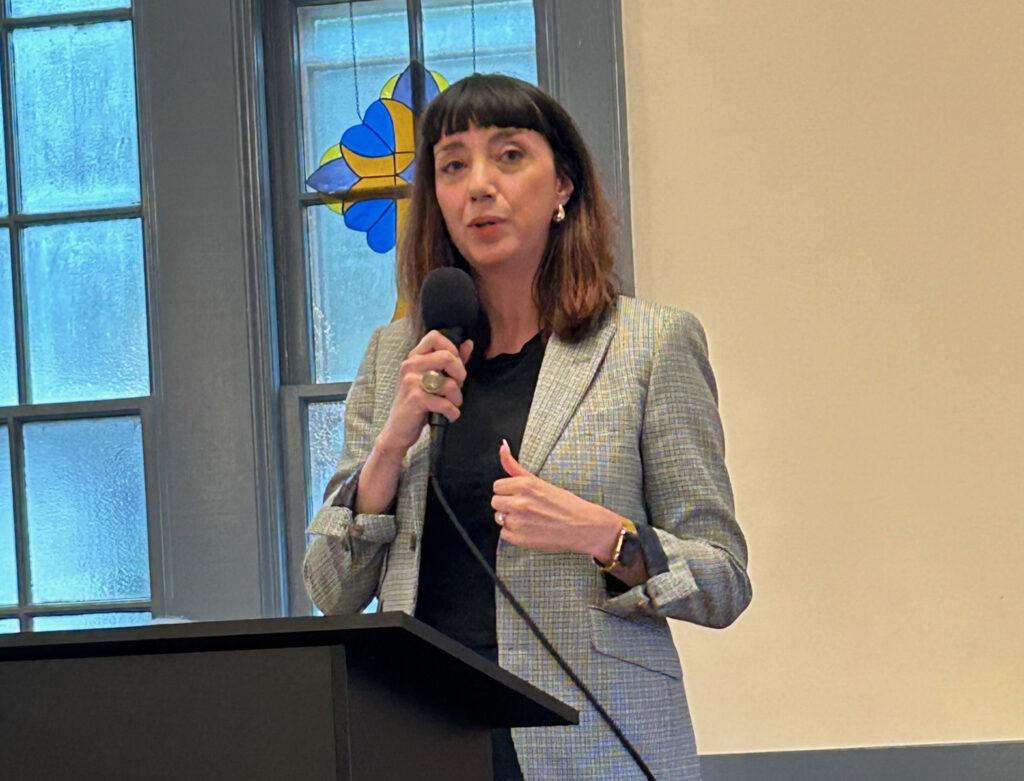
Liz Hanley, a Shelter Island resident raising three children, and presently a Town Board member, was sifting through piles of used clothes with a friend who had four kids of her own. By the end of the day, they were left with heaps of garments that neither family could use. When Liz asked where Islanders took hand-me-downs, the answer surprised her. Aside from basic drop-offs at the Recycling Center’s Goodie Pile, there was no dedicated, grassroots clothing exchange operating here.
Having previously lived in San Francisco, Ms. Hanley was accustomed to church basement exchanges and neighborhood venues where parents regularly swapped kids’ clothing as a standard way of life.
“Kids grow so fast, and it’s so wasteful,” she recalled. “So many times the clothes are in such good condition, but they just don’t fit anymore. It just seems crazy to buy new ones. But you might not know someone in your immediate circle who has kids that size or who like that style of unicorn on the T-shirt. So you put it out in the community, and somebody picks it up.”
Recognizing the gap, Ms. Hanley decided to build a swap from scratch. In the winter of 2022, she approached Father Peter DeSanctis at Our Lady of the Isle to see if he would let her use the church property; he gave her the green light to set up right in the parking lot. Equipped with just a couple of portable garment racks and inventory sourced from her own family and friends, the inaugural swap was launched.
Word spread quickly among parents who visited the church lot on weekend mornings. What began as an informal experiment soon demanded a regular monthly schedule and a larger footprint. As inventory expanded far beyond a few racks in the church lot, the swap temporarily relocated under the outdoor tent at the Shelter Island Library, while donations were dropped off at the Island’s old Potato Barn, and then in the school lobby as temporary holding sites.
As community participation increased, so did the logistical burden. Storing donated clothing in a volunteer’s garage became impossible as inventory piled higher every month, causing Ms. Hanley and her husband David Austin to rent a local storage unit on the Island.
The monthly operation became a heavy lift, where Mr. Austin’s help became more crucial. Prior to each swap, the couple had to rent a U-Haul truck, schlep the heavy racks and loaded bins out of the storage facility, drive to the site, and roll everything out before the crowds arrived. After the swap, they rolled everything back onto the truck, returned to the storage unit, and brought the U-Haul back.
“It was a lot of work,” Ms. Hanley said. “We did that for a couple of years. But it got so big so quickly, and it was so obvious to me that I had to figure it out.”
A permanent fix arrived when the couple purchased their historic 1890s farmhouse on Smith Street from Ms. Hanley’s parents. Originally settled by her grandparents, immigrants from Ireland who began coming to Shelter Island in the late 1930s, the property included a large, sprawling barn.
Moving the operation directly onto the grounds of the farmhouse gave the clothing swap its permanent home base. The central location allowed the swap to transition from an exhausting monthly haul into a settled, reliable destination for the community. Rows of clothing racks and sorted donation bins now fill the rustic barn space, eliminating the U-Haul rentals. The couple’s large circular driveway, steps from the barn, provides an accessible location where Islanders can drop off outgrown items or browse through fresh additions at their own pace.
Surprisingly, the tangible, physical sorting of garments provides an unexpected mental outlet for Ms. Hanley. As an accountant whose professional life revolves around spreadsheets, auditing, and balance sheets, spending hours hanging shirts and baby clothes and organizing physical racks provides a welcome antidote to numbers and tax calculations. The hands-on rhythm of the swap, she said, offers a tactile way to unwind and decompress. The swap is paused during tax season, but generally runs monthly.
Beyond serving as a personal release, the swap has emerged as a unique equalizer on an island defined by socioeconomic contrasts. Where multi-generation local families live alongside summer residents and second-home owners, the barn brings together people from every corner of the community. In a single afternoon, all types of Islanders are sifting through the same racks for growing kids or hunting for hidden gems. The shared atmosphere provides a place where visitors are looking to reduce waste, reuse good garments, and keep functional items in circulation.
When surplus inventory accumulates at the barn or specific items are needed to support local families, Ms. Hanley routinely loads up a mobile rack and brings it to the CAST food pantry on the Island.
The swap has also remained a continuous family affair: daughter Rosie Hanley found stylish dresses to wear at her summer job as hostess at Vine Street Café, while daughters Cat and Indigo “shop” the racks as well. The donations have yielded everything from Prada bags and Lululemon outfits to a pristine white Victorian blouse.
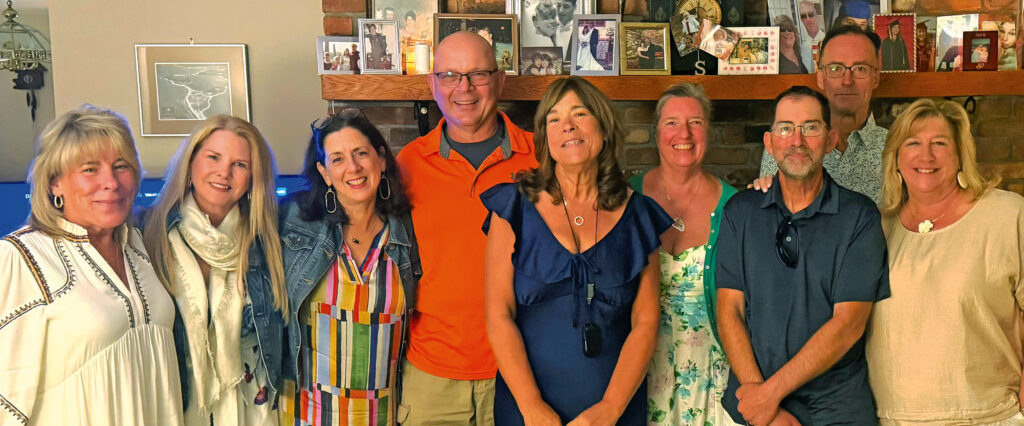
Shelter Island School Kindergarten teacher and swap volunteer Natalie Regan reflected: “I have always loved the different fabrics, patterns, colors, and styles of clothing, and I genuinely find joy and relaxation in browsing and discovering special finds. As my own child outgrew favorite clothes, giving them away could feel bittersweet. Then I began seeing other children in our community wearing and enjoying those same pieces. The swap brings together volunteers and neighbors, while offering clothing for all shapes, sizes, tastes, ages, and genders. It represents what is special about our Island: sharing what we have, taking care of one another, and finding joy in giving something a second life. It is, literally and figuratively, part of the fabric of our community.”
Looking ahead, the future of the Shelter Island clothing swap is brighter and more secure than ever, anchored by the permanent homestead barn and a deepening network of local support of up to 15 volunteers.
To help streamline the continuous influx of donations between swap days, a new drop-off bin has recently been established on Baldwin Road, giving Islanders an accessible, dedicated portal to deposit clean garments year-round without waiting for official event hours.
Today, operating out of the historic 1890s barn in the heart of town, and supported by the new drop-off bin on the corner of Baldwin and Smith Street, the swap serves as a fixture for families aiming to cut down on waste, keep textiles out of landfills, and stretch household budgets. What started with Father Peter’s blessing in a church parking lot has grown into a community sanctuary run straight from the family homestead, bringing out the best in our community.
The next clothing swap will take place on Saturday, Sept. 26 at 25 Smith Street, from 10 a.m. to 3 p.m. Come on down … clean clothing donations and volunteers are welcome.