Working with — not against — nature: Restoring the Island’s landscape, one yard at a time
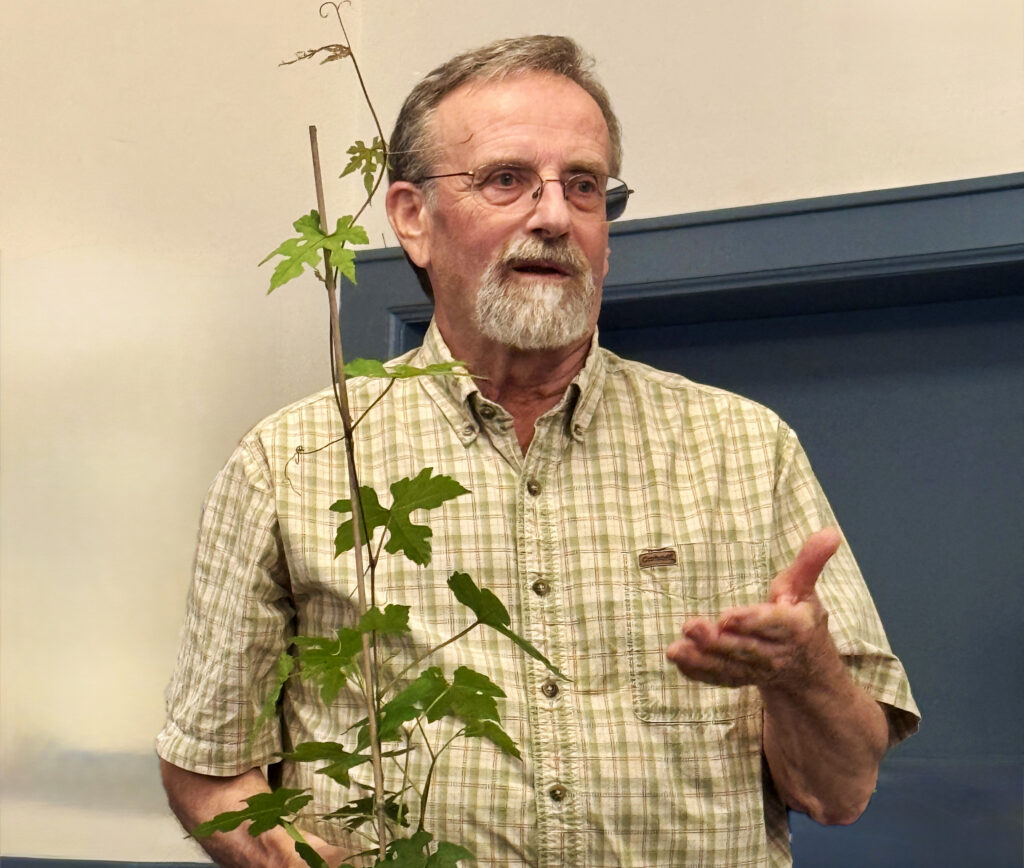
How to reduce the use of herbicides and pesticides while cultivating your own landscape with native plants that support the Island’s wildlife? That was the challenge that drew 44 Island residents to a presentation at the Presbyterian Church on July 9. Co-sponsored by Perfect Earth Project and the Shelter Island Town Green Options and Water Advisory Committees, the program invited residents to see their yards as living ecosystems where healthy soil, native plants, insects, birds, and other wildlife all play essential roles. A theme echoed throughout the evening: “The goal isn’t to conquer nature. It’s to understand it.”
A Different Way of Thinking
With Green Options Committee Chair Tim Purtell as facilitator, the program brought together three speakers whose backgrounds complemented one another. Edwina von Gal, an award winning landscape designer and founder of Perfect Earth Project, has spent more than a decade promoting ecological land care; Andy Senesac, who spent nearly 40 years with Cornell Cooperative Extension, is a weed science specialist whose work has focused on practical strategies for managing weeds and invasive plants; George Huhn, a former research scientist and engineer, shared the perspective of both a scientist and a homeowner restoring the nine acre property he and his wife Julie Brewer own at the headwaters of Menantic Creek.
Together, they challenged the traditional idea of maintaining a perfectly manicured landscape.
Instead, they encouraged residents to create landscapes that support birds, butterflies, bees and other wildlife.
Their message centered on three principles: reduce the use of herbicides and pesticides whenever possible; return leaves and grass clippings to the soil instead of hauling them away; and replace invasive plants with native species. Native plants, they explained, have evolved alongside local wildlife and, once established, generally require less watering, fertilizer, and maintenance.
One Family’s Restoration Story
Mr. Huhn described the restoration of the family’s nine-acre property, which includes meadows, woodlands, wetlands and the freshwater headwaters that feed Menantic Creek, making it an important landscape for wildlife habitat and water quality.
During the past five years they have reduced extensive stands of phragmites, mugwort, multiflora rose, Japanese stiltgrass, mile-a-minute vine, silver grass, Carolina horse nettle and other invasive plants without relying on herbicides.
As a scientist by training, Mr. Huhn approaches the challenge as an ongoing experiment. He summarized four practical principles: starve the rhizomes, remove the seed heads, reduce the seed bank, and help the good plants win by encouraging native species. Restoration is not about winning a battle overnight but patiently shifting the balance in favor of healthy native plant communities.
Practical Ideas Homeowners Can Use
Heavy cardboard covered with wood chips can smother persistent weeds without plastic. Winter rye planted in the fall helps suppress invasive seedlings while protecting bare soil. Collecting native seeds and scattering them in restored areas can help native plants regain a foothold. Knowing when a plant flowers or produces seed often determines the best time to cut or remove it.
Questions From the Audience
The lively discussion covered bamboo, poison ivy, composting, mulch, ornamental grasses, creeping Charlie and the difference between non-native plants and truly invasive ones. One point surfaced repeatedly: Not every non-native plant is invasive. The goal is not to eliminate every imported plant, but to avoid species that spread aggressively and displace the plants that local wildlife depends upon.
Every Yard Can Make a Difference
Perhaps the evening’s most encouraging message was that every property, no matter its size, can become part of the solution. Whether tending a small garden or several acres, thoughtful stewardship can improve wildlife habitat, protect water quality, and strengthen Shelter Island’s natural landscape. Restoring the land is about building a lasting relationship with the place we call home and leaving it healthier for future generations.