Gimme Shelter: Caffeinated
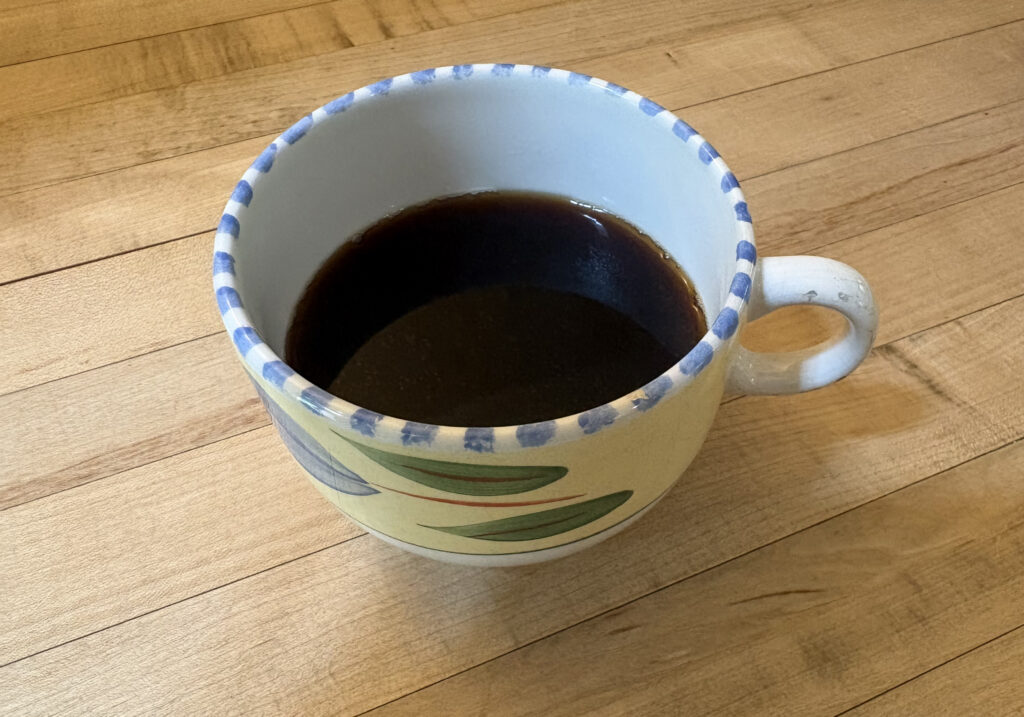
I have become what I feared I would become.
A coffee snob.
No, not that person at Starbucks ordering a grande macchiato pumpkin spice with dark chocolate shavings — please — but one who can’t drink bad coffee.
An old friend of mine lives by the code of refusing things on the basis of LITS (Life Is Too Short). For him it applies mostly to mediocre wine. My LITS is topped by stuff that’s dark and hot going under the alias of “coffee.”
People of a certain age will remember an America when almost all coffee was abysmal. I mean scorched, days-old, twice-used-grounds abysmal, brought to near death in something called a percolator. And weak? I knew immediately what Tom Waits was singing about when I first heard his tale of dubious diner food: “My veal cutlet … tried to beat the [expletive] out of my cup of coffee/But coffee just wasn’t strong enough to defend itself.”
The Starbucks model was beautiful in its simplicity when introduced to a mass market — strong, rich coffee and a pleasant place to sit and sip it, meet friends, talk, work, or read, something that’s been alive in Europe for centuries. The Seattle company brought a longstanding and essential part of the civilization of the species to what seems like every street corner of America.
When our morning drug of choice — long a staple in the Arab world — came to London in the 17th century, some say it helped open the door to the Age of Enlightenment and Democracy to the English-speaking world. The theory goes that many people began congregating in coffee houses rather than pubs, where disagreements of opinions could get rowdy at best and at worst end in blood and teeth on the floor. But by swapping out booze for the delicious, mild stimulant of coffee in a pleasant setting, people could meet, read newspapers, listen to one another, ideas could be debated without bombast and brawling, and consensus, the essential ingredient in Democracy’s brew, could grow.
Benjamin Franklin knew this. Speaking of coffee, he said that “among the numerous luxuries of the table, coffee may be considered as one of the most valuable. It excites cheerfulness without intoxication; and the pleasing flow of spirits which occasions is never followed by sadness, languor or debility.”
Healthy for the mind, yes, but is coffee good for the body? Not if you’re pounding it day and night. But taken in moderation, Donald Hensrud, M.D., writing on the Mayo Clinic website, has said studies “found no connection between coffee and an increased risk of heart disease or cancer.” Further studies have shown “an association between coffee consumption and decreased overall mortality and possibly cardiovascular mortality … and appears to improve cognitive function and decrease the risk of depression.”
Hallelujah!
But too much of a good thing … well, you know.
Maggie Sweeney, a psychiatry researcher at Johns Hopkins and an expert in pharmacology, has studied “caffeine use disorder.” In a report written with a colleague they found that “problems such as insomnia, gastrointestinal troubles and anxiety … were caused by or exacerbated by caffeine … participants who met criteria for caffeine use disorder tended to consume more caffeine, and were younger and more likely to be cigarette smokers.”
Stands to reason. Those kids will never get sick or die, right?
Ms. Sweeney reported that she found “fascinating how little people think about coffee or other caffeinated drinks as stimulants.”
I think I might have touched base with caffeine use disorder once when I was researching a story on coffee retailers and called a man in New Jersey who sold beans and ground coffee. When the businessman answered I told him who I was, what the focus of the story would be, and asked if I could use him as a source. He responded, “Wait a minute! Hang on! Who are you? You want to do a story on me? Who are you with again? Oh, my, God, yes! Yes! I love talking about coffee! I could talk about coffee all day! Coffee’s my life! I love coffee! I love bringing coffee to people!”
On for about a minute more, his voice rising and dipping and rising again. What do they say — don’t get high on your own supply? He was O.K. Really! I called back early the following morning and he had brought down the RPMs dramatically.
My love came early. Before grade school on winter mornings, when gray Illinois skies filled our kitchen window, and my mother had the country music station on and was crooning softly along with Patsy Cline, she’d set down bowls of hot cereal or plates of eggs, toast and bacon for us on the kitchen table along with cups filled two thirds with hot milk, a third of hot coffee and a spoonful of sugar.
Being a snob I can say: No cup has ever been better.