Gone fishing: Albie invasion
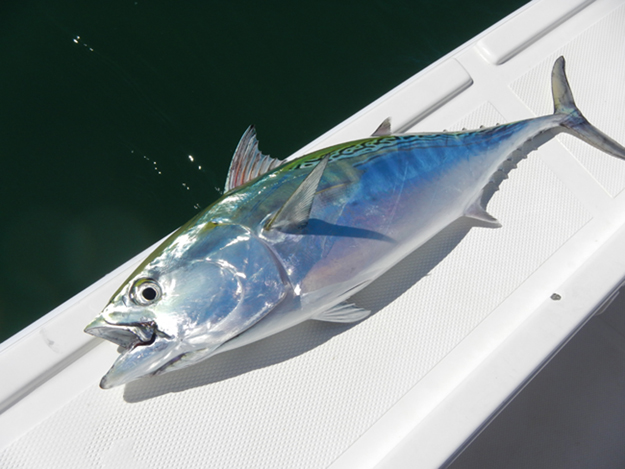
One of fall’s most iconic fisheries is officially underway here on Long Island. A body of yellowfin tuna has moved into the waters south of Shinnecock and Montauk, giving anglers an exciting start to the fall pelagic season. Pelagic refers to species residing living in the open ocean, far from shorelines and the seafloor.
Boats working the inshore tuna grounds are reporting lots of action with most of the yellowfin ranging from 15 to 40 pounds. Although these fish have yet to consistently set up behind the draggers, they are still present in impressive numbers and feeding heavily on sand eels.
However, choosing the right presentation has become especially important. The yellowfin are far from the only pelagic species occupying the grounds. An even larger body of false albacore has moved in alongside the tuna. At times, acres of blitzing albies have completely taken over the surface. This creates a great opportunity for anglers targeting albies, but a burden for those looking to reach the yellowfin underneath them.
Small presentations such as epoxy jigs and smaller RonZ lures have lost much of their effectiveness. The albies greatly outnumber the yellowfin, meaning that these smaller offerings are often intercepted before a yellowfin has the opportunity to reach them.
As a result, anglers have begun turning to larger presentations. Full-size RonZ lures and heavier Streaker jigs are helping fishermen avoid at least some of the false albacore while continuing to connect with yellowfin. Given the ferocious feeding habits of the false albacore there is no avoiding them all together, but switching to large presentations at least gives anglers a slight edge in finding the right fish.
The arrival of so many false albacore may also explain the sudden disappearance of the schoolie-sized bluefin that dominated the inshore grounds throughout much of the summer. Those bluefin had provided consistent action for anglers south of Montauk and Shinnecock from early July to the end of August. But now, they almost seem to have moved on. A lot of the bait they were feeding on (squid and sand eels) has either moved inshore or out toward the Canyon, providing more reason for their sudden disappearance.
The false albacore are by no means bad news, especially for light tackle anglers. Albies are one of the most anticipated species we see here in the fall. Their speed, aggressive surface feeds and long runs make them a favorite among most inshore anglers. Waves of them have begun to make their way inshore and while not as plentiful as offshore, there are definitely enough of them to make an effort to find them.
Having just arrived in our area, these fish aren’t extremely picky yet and will have no problem crushing an epoxy jig or albie snack. In the coming weeks, spots like Truman’s Beach and north of Plum Island are going to be worth a look for those targeting these inshore speedsters.
Smaller bluefin are still being caught toward the western end of Long Island, but the fish that occupied the eastern inshore grounds have seemingly disappeared for the time being. Whether they return once the albies begin moving closer to shore remains to be seen.
Closer to home, striped bass are beginning to trickle into local waters, but given that water temperatures remain much where they were in August, no significant fall striper bite has developed. A few cooler nights and the arrival of more fall bait should begin moving additional bass into the area, but for now the migration is only in its early stages.
Bottom fishing remains strong farther east. A late wave of fluke has moved onto the grounds surrounding Montauk and Block Island, extending a season that appeared to be slowing down only a few weeks ago. Sea bass fishing also continues to improve across the region. Overall, anglers are finding more quality fish. A reminder that the seabass bag limit has now increased to six fish per person; with less smaller seabass to deal with, anglers are now finding it much more worthwhile to dedicate trips to sea bass.
For now, yellowfin remains the main attraction south of Montauk and Shinnecock. Between the yellowfin, the proliferation of false albacore and the first striped bass beginning to appear, the transition into fall is clearly underway. The water may still feel like summer, but the fish are already telling a different story. While anglers are still unsure of what this fall will hold, the abundance of bait and presence of albies offshore are great signs for what is ahead.