Jenifer’s Shelter Island Journal: The vote of many colors
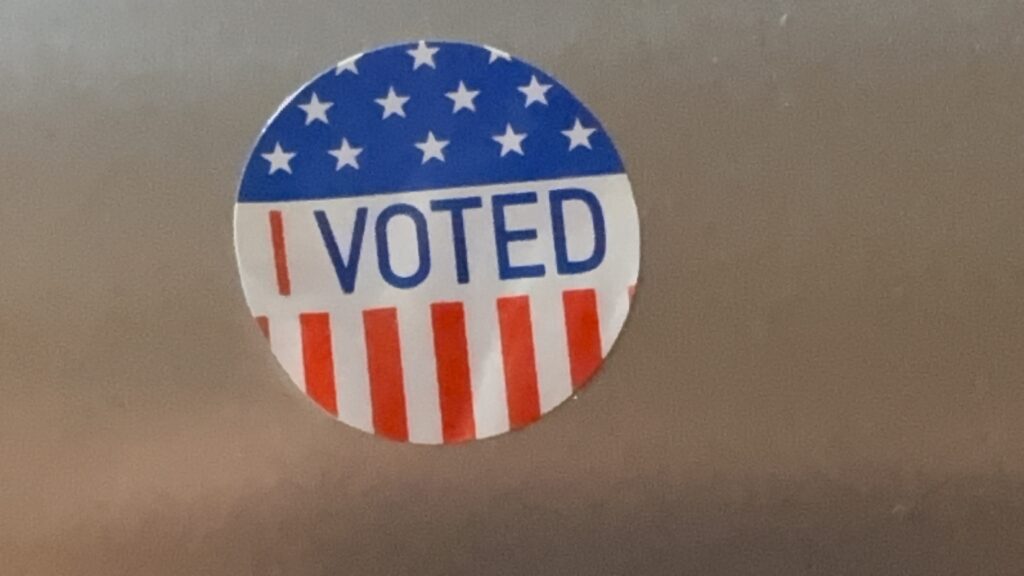
Oh, yes, indeedy these mid-terms already in progress and culminating in five days manifest a miracle that is meant to occur every single time we have a nationwide election: Hundreds of millions of disparate people from every imaginable background, culture and language displaying every imaginable human skin tone coming together as the citizens of one nation, the United States of America, and casting, each one, their sacred and inviolable vote.
There’s a story in the Bible wherein Jacob gives his son, Joseph, a “coat of many colors.” In those days, such a coat was considered a visible marker of status in the family. So, too, does our right to cast a vote confirm our status as equal citizens in our American family. At least, though maybe in not so many wordy words, that’s the story we tell ourselves. How many of us actually believe it, though, or is it more like a fairy tale than an origin story?
I mean, let’s face it, given the history of men and nations since time immemorial, the very idea that any nation, let alone a huge, powerful one, could be cobbled out of a roiling mass of humans from different ethnicities, cultures, languages, would seem preposterous on its face. However, speaking of “face,” it is understandable that our “Founding Fathers”— most of whom were wealthy and over half, slaveowners — would take on face value John Locke’s provocative ideas.
For instance, from Locke’s The State of Nature: “To understand political power right, and derive it from its original, we must consider, what state all men are naturally in, and that is, a state of perfect freedom to order their actions, and dispose of their possessions and persons, as they think fit, within the bounds of the law of nature, without asking leave, or depending upon the will of any other man … A state also of equality, wherein all the power and jurisdiction is reciprocal, no one having more than another; there being nothing more evident, than that creatures of the same species and rank, promiscuously born to all the same advantages of nature, and the use of the same faculties, should also be equal one amongst another without subordination or subjection …”
The Fathers strove to be the equal of kings, but they weren’t crazy. They applied those heady ideas to themselves only — who else could qualify?
That’s the trouble with a transformative idea; like lightning, you can’t get it back in the bottle. Before long all subordinate classes of the human species, black people, brown people, women, etc., were seduced by that extraordinary notion of equality. They just wouldn’t leave it alone.
In his 1869 speech, Composite Nation, former enslaved person and abolitionist Frederick Douglass says this: “The real trouble with us was never our system or form of government, or the principles underlying it, but the peculiar composition of our people; the relations existing between them and the compromising spirit which controlled the ruling power of the country … We have for a long time hesitated to adopt and carry out the only principle which can solve that difficulty and give peace, strength and security to the Republic, and that is the principle of absolute equality. I close these remarks as I began. If our action shall be in accordance with the principles of justice, liberty, and perfect human equality, no eloquence can adequately portray the greatness and grandeur of the future of the Republic … we shall spread the network of our science and our civilization over all who seek their shelter, whether from Asia, Africa, or the Isles of the Sea. We shall mould them all, each after his kind, into Americans; Indian and Celt, Negro and Saxon, Latin and Teuton, Mongolian and Caucasian, Jew and gentile, all shall here bow to the same law, speak the same language, support the same government, enjoy the same liberty, vibrate with the same national enthusiasm, and seek the same national ends.”
It’s finally dawned on me what Locke and Douglass are talking about, and what Lincoln meant by “a more perfect union,” our absolute acceptance of the “principle of absolute equality.” Not just in terms of political, economic or social status — at least not yet — but equality of human value within a unified species. We seem to get the “freedom” piece — all the rights and privileges that are due us — but that “equality” thing has eluded most of us, particularly those who seem to have been born somewhat “more equal” to begin with.
I’m excited about this “vote of many colors” when, whatever the outcomes, equals in citizenship are free to vote their consciences. I also know that without that equality, this democracy won’t fly, any more than an eagle with one wing. See you Tuesday.