‘Littles’ with big talents and dreams: Young musicians find their voice at Perlman
Shelter Island has its own summer sounds — halyards tapping against masts, osprey calling overhead, children’s voices at play and the incoming tide lapping at the shoreline.
And then there is Perlman. For seven weeks each summer, young string players from around the world bring another voice to the Island. They are the “Littles” of the Perlman Music Program’s Summer Music School. This year there are 34 young string players, ages 12 to 19, living, learning and making music together.

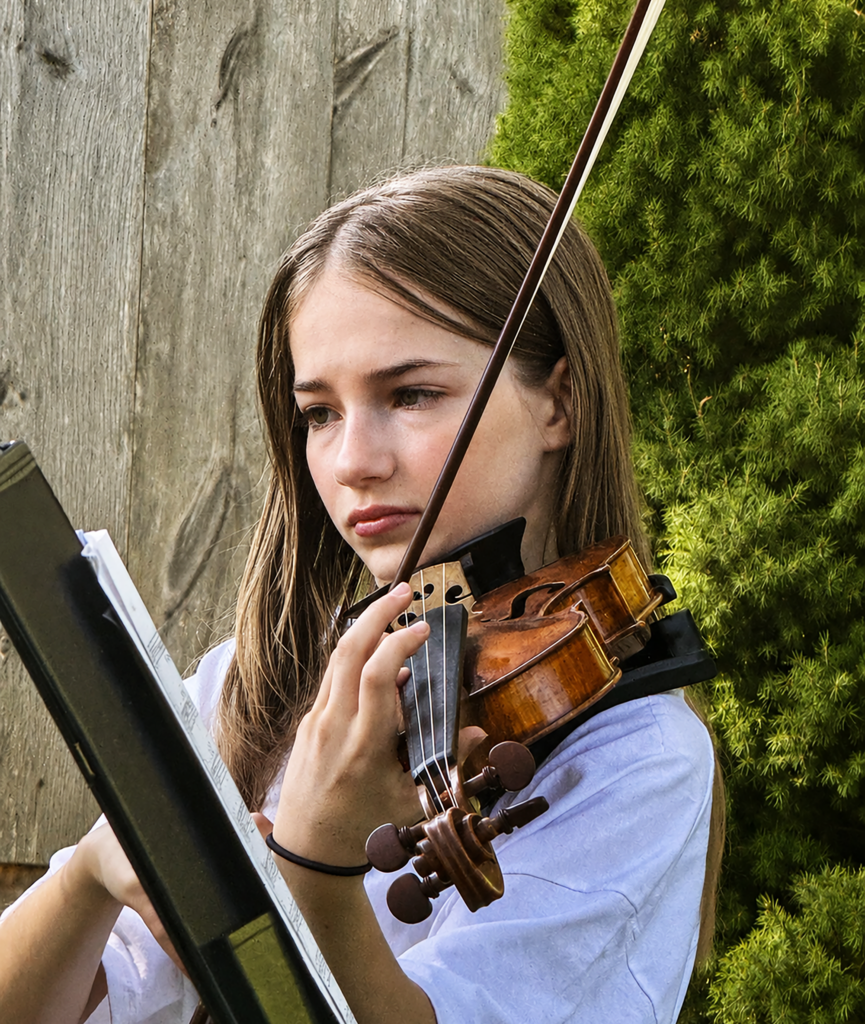
Saturday morning, some of that music traveled beyond the Perlman campus to the Shelter Island History Museum Farmers Market. Among the performers was Iza Kamnitzer, 12, a violinist from Montreal in her first Perlman summer. Petite, with her violin tucked beneath her chin, she settled into quiet concentration.
She had been walking home when her mother texted that she had been accepted. “I didn’t think I was getting in,” Iza said. “I was just very, very happy.”
Now working on the Mendelssohn Violin Concerto, Iza described what happens when everything falls into place. “I’m just concentrating on the music,” she said. And afterward?
“I’m really happy.”
For Valentina Chen, 16, a violinist from Princeton, N.J., four summers at Perlman have given her time to recognize how much she’s changed. “I think I just evolve so much within the seven weeks that I’m here,” Valentina said.

The growth, she explained, comes not only through practice and lessons, but through chamber music, orchestra and learning alongside others who are growing, too. What has Perlman given her beyond becoming a better musician? “It might sound cliché,” Valentina said, “but family.”
For Jesse Krentz, 17, a cellist from Seattle, his first Perlman summer has opened up a wider musical world. “It’s really given me a bigger musical outlook,” he said. Here, Jesse is learning to move beyond the mechanics of performing toward something more personal: “Putting my full self out when I’m performing.”
And when rehearsals end, the music often doesn’t. Students gather at night to sight-read Beethoven, Schubert, Brahms or Tchaikovsky for fun. Over meals, Jesse said, conversations can turn into spirited debates over favorite cello concertos.
“The biggest thing is the community,” he said.
That sense of belonging reaches back to Toby Perlman, who founded the program in 1994 with a vision of creating a nurturing environment for exceptionally gifted young musicians, and continues through Itzhak Perlman’s artistic leadership. Catherine Cho, Director of the Summer Music School, sees what happens here as something larger than musical technique.
Living, eating, rehearsing and singing together give the Littles opportunities, she said, “not only to discover their voice, but how to use their voice.”
The weekend Works in Progress concerts are part of that discovery. The music has been studied and prepared, but sharing it with an audience offers another chance to communicate, learn and refine. Over seven weeks, Ms. Cho sees “transformations from the inside out” — through courage, curiosity, experimentation and exploration. Despite the solitary hours these young musicians spend practicing, she hopes they leave knowing something larger.
“They don’t feel alone in the world,” she said. “And they don’t have to do it alone.”
Sunday’s Family Concert extended that spirit to younger listeners with a playful, “true-ish” retelling of Itzhak Perlman’s life, performed by the Littles with music, costumes, wigs and humor. Young audience members were invited not simply to listen, but to discover music as story.
Soon, instruments will be packed and the Littles will head home. Some will return next summer. Others will take their next steps into conservatories, ensembles, orchestras and onto stages around the world. But the friendships formed here are unlikely to end at the ferry.