Gone Fishing: The art of missing a tautog
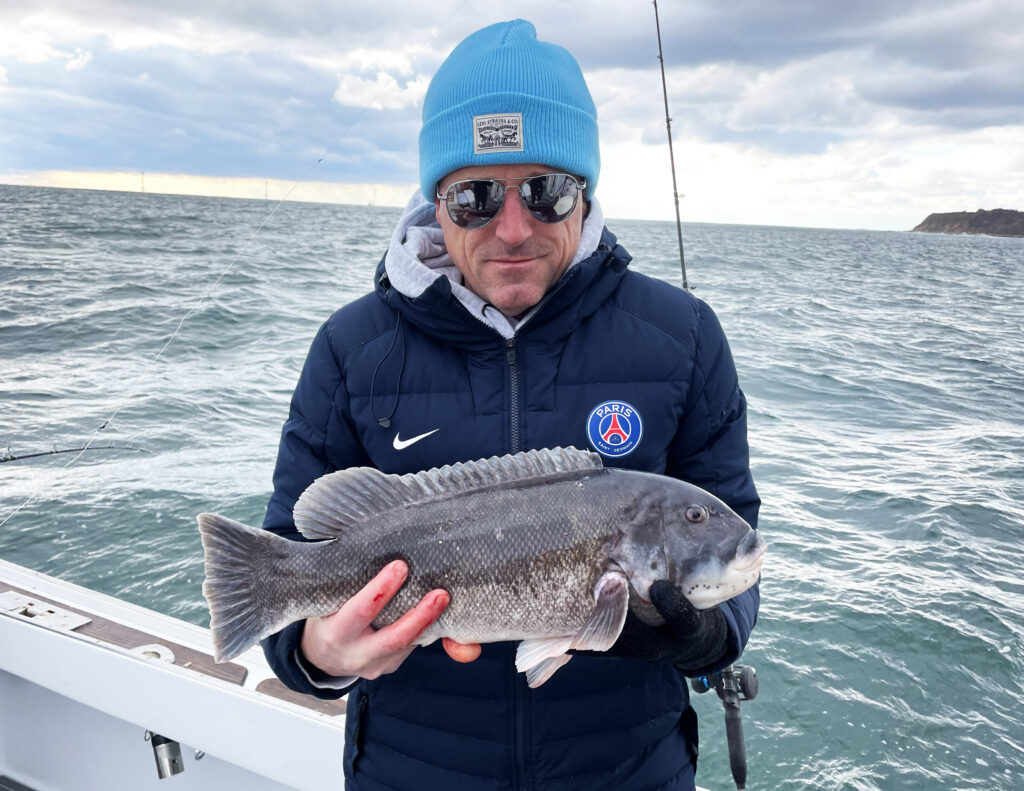
Chisel … chisel … swing … then yell out in frustration as you’ve missed yet another good bite. If you’ve tog fished before, this feeling is all too relatable.
I’ve written about tautog’s attraction to structure (rocks, wreck, weeds — anywhere they can find shelter and food) and the merits of a jig versus a rig. But with blackfish season in full swing, it’s time to explore what makes these fish so frustrating to catch, yet so desired here. For me, black fishing borders on obsession. Every missed bite leaves a question. Was the swing of the rod too early or too late? Was my bait rigged properly? Was the bite even a blackfish? The questions then quickly recede as another crab is rigged and dropped down.
Spend enough time around blackfish anglers and you’ll discover that everyone has something they swear by. One prefers green crabs, another says big tog only eat white leggers. Some only fish with whole crabs, while others carefully trim their baits in two. Ask about hook placement, whether or not to fish a top shot or jig color, and you may find yourself in a conversation that lasts longer than it takes to bait an entire bushel of crabs.
The growing popularity of jig fishing has added another dimension to that conversation. Traditionally, fishermen targeted blackfish exclusively with rigs paired with a stiff rod. While traditional, stout conventional outfits still have their place in today’s fishery, particularly in deep water or strong current, fishing light jigs, braid, and sensitive spinning rods have given anglers another way to approach the same rock piles. When conditions allow, a light jig lets a blackfish pick up the entire presentation and swim away freely. It also helps the angler feel the bottom, the scratches at the bait and, eventually, the tog.
But once hooked, a good blackfish makes that lighter outfit feel considerably smaller as it fights to reach structure, leaving the angler wishing they reached for a rod with more backbone. But before any of that happens, you have to actually hook the fish.
To most, learning when to set the hook is the most challenging part of black fishing. With their thick, jutting teeth, blackfish are equipped to bite and crush hard-shelled prey. Their feeding process can send a confusing series of signals up the line. The start of a blackfish bite often starts with a few sharp taps on the end of the line or, or as veteran tog angler would say, “scratching at your bait” This may seem promising at first, until you swing and find nothing there.
The initial pecks at the bait is what confuses most anglers. Generally, fishermen want to swing at bites when they first feel them, to avoid losing the fish. But catching blackfish requires patience in this regard. It is entirely possible to drop an entire crab down and have it ripped to shreds without getting a bite deserving a hookset. Coming up with an empty hook does not necessarily mean you missed a good fish.
That can be difficult to accept when the person beside you is catching.
Understanding when to let your crab soak and knowing when to replace it is incredibly important. A steady stream of small pecks can leave a crab looking intact on the hook even after its softer insides have been picked away. Like humans, tog are after what’s inside the shell, so a crab that’s been picked clean has lost most of its desirability. In situations where you fear that might be the case, freshening your bait regularly is the remedy.
On the other hand, there are times, especially as the water cools, that a crab will sit for a while and then come up looking the same as when the angler dropped it down. When fish become sluggish, it takes them a while to even get a taste of the bait. Constantly reeling up to inspect a perfectly good bait may take it away before a tog commits. Describing a bite worth swinging on is nearly impossible, partly because it does not feel the same every day. A distinct knock followed by a subtle sense of weight can be the signal you’re waiting for. Other times, the take is much less obvious. A larger tap alone doesn’t guarantee that the fish has the hook.
Water conditions add another piece to the puzzle. Temperature plays a huge role in finding blackfish. Earlier in the season, when water temps are warm, blackfish will sit in shallower water. As things begin to cool off, they make their way into deeper water, as the shallower grounds become too cold for them. Finding fish is one thing, getting them to bite is another.
Rather than expecting every fish to deliver the same bite, pay attention to the ones you successfully hook. Making small observations can help you recognize the next opportunity. Experience gradually makes the signals more familiar. It rarely makes them certain. That uncertainty is a large part of the appeal for many anglers. You can spend years blackfishing and still have a day when you feel as though you’ve forgotten everything. Then one bite comes together: the tap, the weight, the hookset into a fish that you can’t get a crank on until 10 seconds into the fight. Suddenly, all those stolen crabs seem worth it.
And when the next bite leaves you swinging at nothing, you reach for another crab.