Rabid bat discovered in Island home: Family of five unharmed by intruder
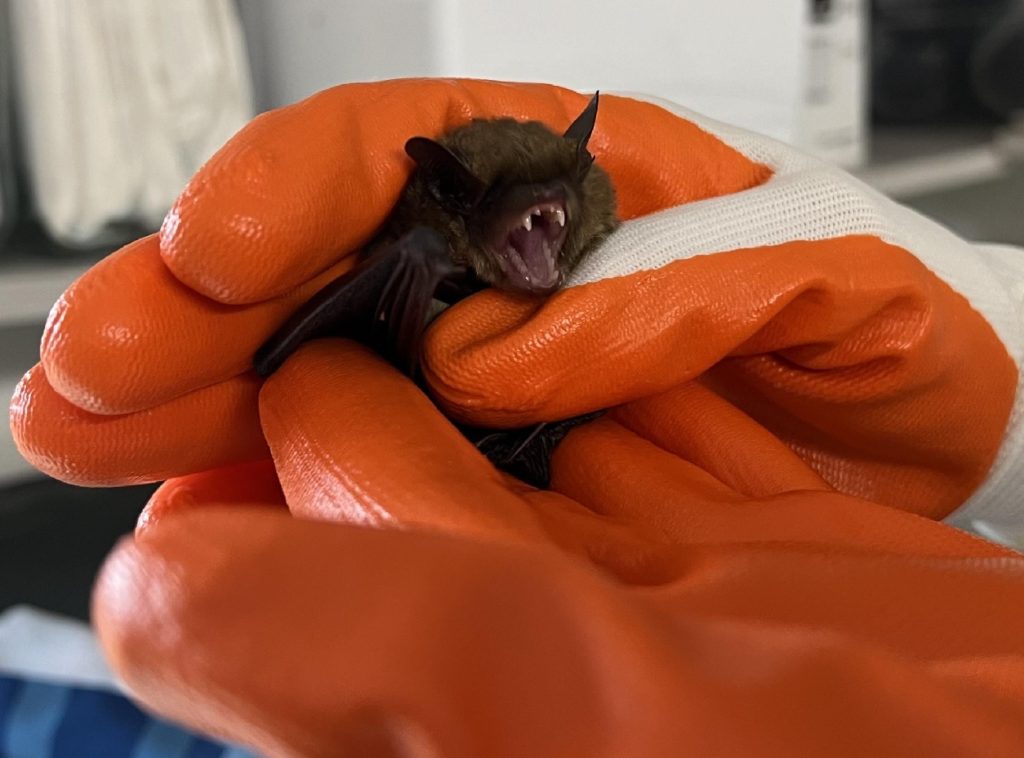
On the Friday of Labor Day weekend this year, a large brown bat was removed from an Island family’s house and later tested positive for rabies.
This was confirmed when Animal Control Officer Jenny Zahler took the bat to the Suffolk County Department of Health Services laboratory in Yaphank. On the following Wednesday the department declared the bat was infected with the disease.
Since the middle of September the Health Department has reported 27 cases of rabies in the county. In 2025 there were 46 cases documented.
According to the World Health Organization, rabies is a virus that attacks the brains and spinal cords of mammals and can be transmitted to other mammals, including humans. It is classified as a deadly disease if not treated quickly. Animals on Shelter Island, such as bats, raccoons, skunks and foxes are susceptible to rabies.
Bat In The Bedroom
The infected bat recovered by Officer Zahler was from the home of married couple Nick Fribourg and Alex MacCallum, who also have a home in Brooklyn. That Friday before Labor Day, Mr. Fribourg had stayed up late watching TV and had fallen asleep, while Ms. MacCallum and their three boys, Teddy, 11, Charlie, 9 and John, 5, had all gone to bed at their regular hours.
Waking about 3 a.m., Mr. Fribourg went upstairs and got into bed but heard a “squeaking that sounded like it was coming from my bedside table,” he said. “I didn’t want to wake Alex so I turned on my cellphone’s flashlight and crawled around but didn’t find anything.”
The next morning they saw a “brown lump” on one of Ms. MacCallum’s rolled-up yoga mats in the bedroom. “I called Jenny immediately,” Mr. Fribourg said. “She was here in 10 minutes and took the bat with her big brown gloves and put it in an Amazon box. I asked her to have it tested.”
Officer Zahler was skeptical at first, she told the Reporter. “At least since 2013 we’ve never had a rabid bat,” she said.
Mr. Fribourg was in the better safe-than sorry position. Bats can transmit the disease through bites and, he said, “We all had scratches from messing around during a Shelter Island summer.”
Word didn’t come from the County Health Department until the following Wednesday that the bat indeed was rabid and “we were told to get shots immediately,” he said. “I want people to know about this,” Mr. Fribourg said, so everyone will be aware of possible dangers.
Danger Signs And Solutions
Signs of rabies, according to the New York State Health Department “is usually a change in an animal’s behavior. It may become unusually aggressive or tame. The animal may lose its fear of people and natural enemies. A wild animal may appear affectionate and friendly. It may become excited or irritable and attack anything in its path. Staggering, convulsions, choking, frothing at the mouth and paralysis are sometimes seen. Many animals will make very unusual sounds. Infected animals usually die within one week after showing signs of rabies.”
If you think you’ve been exposed to a rabid animal, the State Department of Health advises to: “Wash all wounds thoroughly with soap and water and seek medical attention immediately. Report all animal bites to your county health department, even if they seem minor … Try to keep track of the animal that exposed you and report this information to your county health department so the animal can be captured safely …”
Officer Zahler said, “Vaccinating your dogs, cats, ferrets, horses and livestock against rabies is vital. If you see wildlife acting strangely, especially a rabies vector species such as raccoons, bats or foxes, call me immediately at 631-749-5771.”