A weathervane’s journey from Maine to the Island: Stunning copper sculpture tops the library
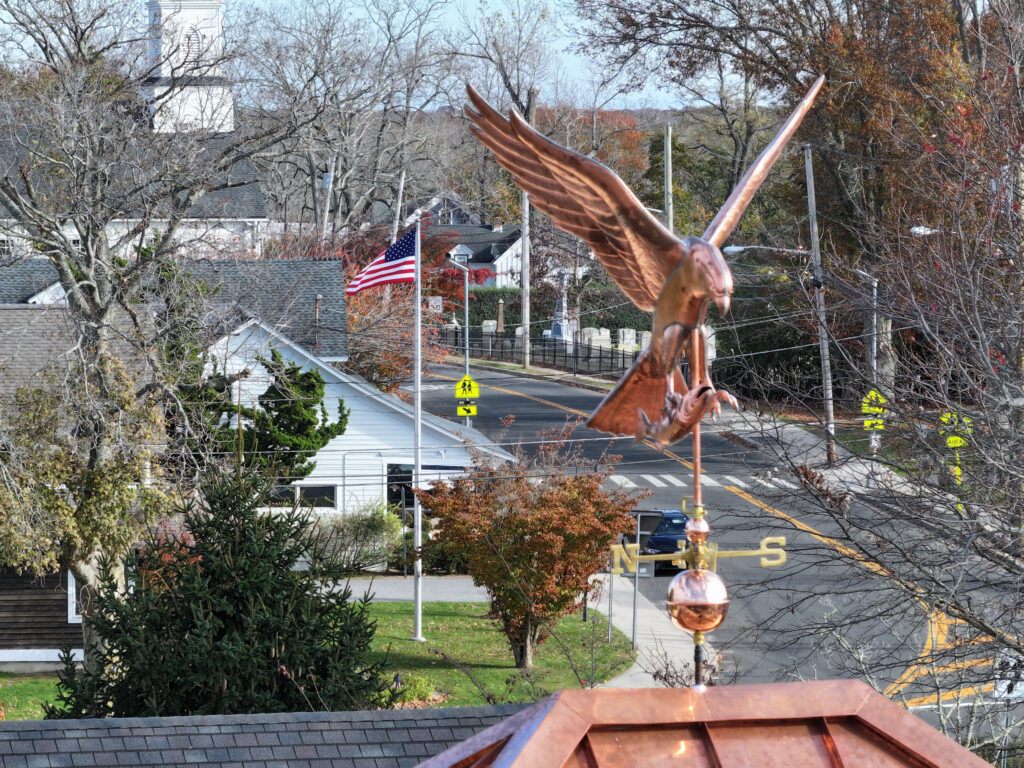
It took 12 weeks of work in a Maine studio before the weathervane now gracing the top of the newly constructed Shelter Island Library was ready to make its journey south. Packed in a wooden crate by its creator Paul McElvain, the copper sculpture rode a semi to its new home.
Depicting an osprey in flight with its catch, the model was chosen by Library Director Terry Lucas who had seen a photo of a much smaller version made by Mr. McElvain’s father and mentor, coppersmith William McElvain.
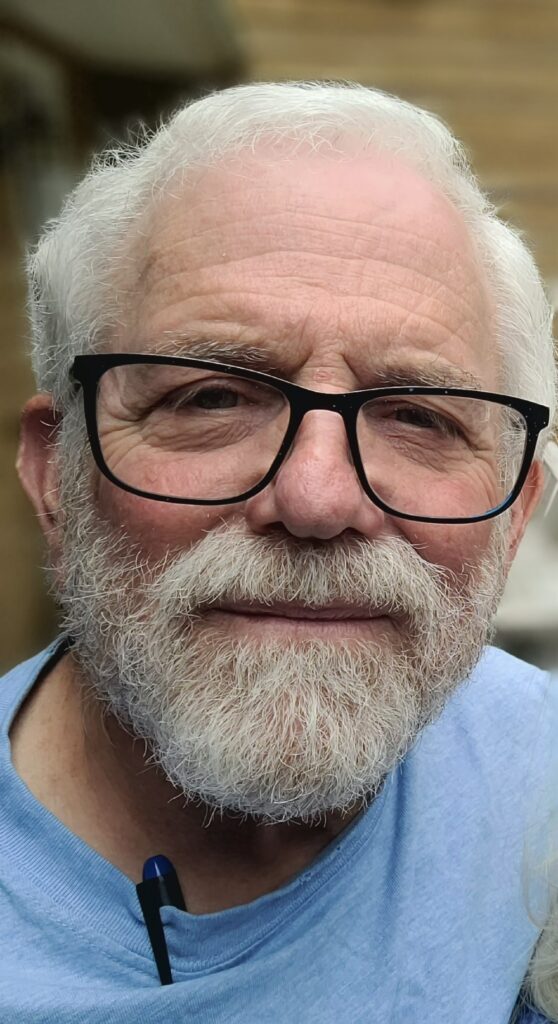
Speaking from his home studio in Bucksport, Maine, Mr. McElvain, who specializes in copper weathervanes for any type of structure, said it was an honor to create something for the Library and to wok from his father’s model. He grew up learning the craft and art from him, starting out when he was small “cutting pipe and joints,” until a proper apprenticeship started when he was18.
“He taught me everything he knew,” Mr. McElvain said

He’s written about his father, noting that he taught him “that each weathervane carries more than just aesthetic value … it is about breathing life into raw materials, transforming them into something that could tell a story.”
Copper is a material that will change over time, Mr. Mr. McElvain said. The osprey weathervane now “clean and shiny will, in a couple of months turn a brownish color, like an old penny, before getting a green patina after 15 years, just like the Statue of Liberty.”
According to Thoughtco.com, weathervanes have been markers topping important places in communities since the ancient Greeks for beauty, but also for the practical reason to know which way the wind is blowing, even if you don’t need weatherman. Roosters were common figurers for weathervanes and in early America different designs began to emerge, such as ships, animals and human figures depicting Liberty.
An Osprey Named Dinah
Mr. McElvain’s stunning copper work for the library has been named “Dinah” by Ms. Lucas, she said, to honor Dinah Williams, an important figure in legend and fact on Shelter Island. “We named her Dinah who was a strong and resilient Shelter Island woman,” Ms. Lucas said.
Dinah was one of the Island’s first freed slaves, according to the Shelter Island History Museum, and Dinah Rock Road, the street stretching north from Gardiner’s Bay Country Club honors her. Born into slavery in Orient, Dinah gained her freedom at 25, and became a property owner, according to the Shelter Island census of 1830. She inspired respect from her neighbors, one of whom, August Griffin, complimented her “manners, conversation and knowledge,” according to sources at the Museum. Dinah cared for ill and aging Island residents, a town document states.
She died on the Island in March 1837, which was noted in Mr. Griffin’s diary.
Now, for the legend: Dinah would sit on a flat rock — later named “Dinah’s Rock” — and clean her freshly caught fish, playing a bosun’s pipe and waving to passing fisherman and sailors. Sailors would then sing to her, “Someone’s in the kitchen with Dinah,” referring to her home up the hill from the rock.
Professor Eben Horsford purchased much of the Dinah Rock area in 1873, and later opened a “pleasure resort,” according to archived advertisements at the th Museum. The popular tourist site consisted mostly of a large pier, where boaters and the steam ferry Cambria docked to take in the pier’s sights and amenities. Visitors enjoyed picnicking as well as the pier’s carousel, from which the current Carousel Lane later derived its name. The site was active until the 1890s, according to Museum, when Professor Horsford closed his “resort.”
Historian Ralph Duvall wrote in the 1930s: “During our lives we have seen some radical changes take place in this particular spot,” which might qualify as an understatement.

Remembering Dinah by naming the copper osprey topping the library after her is an idea Mr. McElvain applauds, he said. He’s written about his work and its human connections: “I can’t help but feel a swell of pride when I see my creations adorning rooftops, silently guiding people through their days. It’s more than just metal; it’s a connection to our lives, our homes, and the shared experiences that bind us together. Through this journey, I’ve learned that art is not just about creating; it’s about remembering and cherishing what came before us.”