A history of service — Shelter Islanders who answered the call over the centuries

Shelter Island has a history of military service to the nation that stretches back before America became a republic.
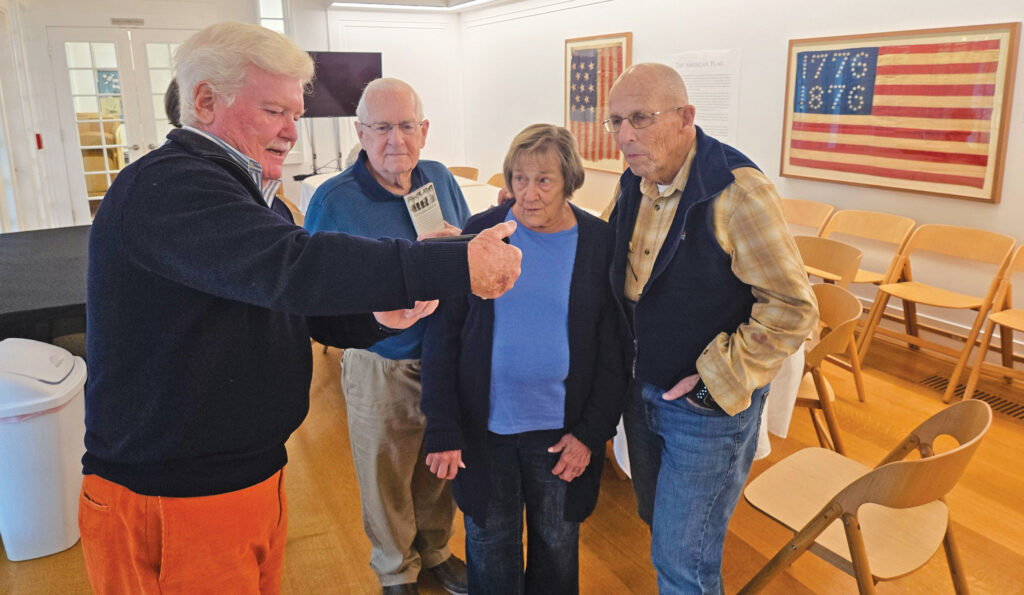
The Shelter Island History Museum records show there were 27 households on Shelter Island at the onset of the Revolutionary War and 43 freeholders signed a 1775 Association document supporting the Continental Congress and Provincial Convention. This was the Island’s own Declaration of Independence a year prior to the nation’s. Essentially, every eligible man courageously promised to go to war for their young country if called, a full year before they were asked.
The Island has nine officially recognized patriots, including celebrated General Sylvester Dering. Islanders such as James Havens served as privateers — or pirates working for the revolutionary cause. When the Island was occupied by British troops who camped out in the bay on their great ships, the diaries of Ludowick Havens describes Hessian soldiers — mercenaries under British command — prowling around the Island.
Grand Army of the Republic
At least 31 known Islanders served in the Civil War, which is an incredible number considering the population numbers at the time, which are minuscule compared to today. One of them who signed up and went south for the Union was Frank Barnes who, according to census records, was 11 in 1860, so it’s presumable to conclude that he served as a drummer or bugle boy for the Union Army.
Another enlistee was J. Madison Hempstead. A family of free black mariners, the Hempsteads as early as 1820 were among the first black landowners on Shelter Island. Born into slavery in 1805, Madison’s father James was a landowner by 1860, owning a huge swath of land including what is now Westmoreland.
Madison Hempstead enlisted of his own volition in the Union cause during the battle of Fort Sumter. His brother Henry joined up shortly after. Henry returned home safely. Madison died in a Confederate prison camp.
Albert E. Scott, born into slavery in Virginia, had both of his Achilles tendons severed to prevent him from running away during a rebellion. Still, he fought for the Union Army after he was granted his freedom.
Another Islander who answered the call was William M. Halsey, who joined K Company of the 127th Regiment of New York. The Museum archive houses a 10-page written account in Halsey’s hand, which includes a brief history of his personal experience of what he endured during a Nov. 15 to Dec. 21, 1864 campaign when General Sherman was on his “March To the Sea” through Georgia.
Captain Sylvester Nicoll served in the Union Navy and was killed in a tragic accident on a gunboat at Norfork, Va. Sgt. Elias Havens Payne of the 81st New York Regiment was wounded in the thigh during the Battle of the Wilderness. Sgt. Henry Howard Preston of the 6th New York Calvary followed General Phillip Sheridan on his famous ride from Winchester to Cedar Creek. In his service he sustained a wound to the ankle that he suffered with for the rest of his life.
After his Civil War service Nathan T. Wilcox purchased the land that later became Piccozzi’s Wharf and ran a coal, wood and grain business there.
Over There
Frederick Zabel was the first Islander to leave to fight in World War I. A ceremony was held at North Ferry to see him off; there is a photograph of the event in the Museum’s collection. He was joined in his courageous effort by Henry Martin Mitchell, Maurice Tuttle Jr., William Edward Dickerson and George Remington Havens, among others.
Henry Martin Mitchell ultimately sacrificed his life. Shelter Island’s American Legion Mitchell Post #281, which was founded on Feb. 22, 1922 in the wake of WWI, bears his name in honor of that sacrifice.
WW II
During World War II, the ship-building industry in Greenport began producing “mosquito” boats, so called because they were capable of sufficient speed to out maneuver submarines. Some 300 were ordered by Allies. They were a precursor for the PT boats built and used during the war.
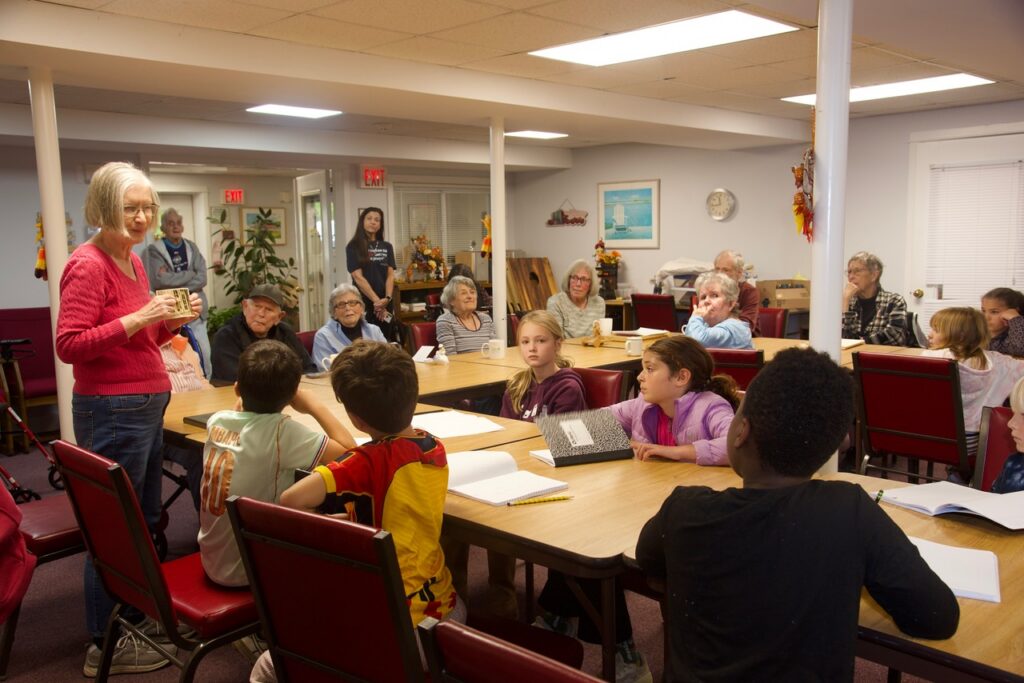
Boat building continued to be a significant part of the home effort during the war with many women taking up the mantle as the young men were away. But women weren’t just helping to build boats. The museum currently has a small exhibit up called “Un-sung Heroes,” curated by a group of Shelter Island High School students, exploring and honoring women’s service with particular reference to activities when women were first allowed to enlist. The exhibit draws heavily on the accounts of Dorothy Eben Bloom and Dorothy Dickerson Clark, who bravely enlisted in the army after her brother William Dickerson had a perilous experience that affected her whole family.
Additionally, a truly huge number of Islanders during WW II served as active members of the Aircraft Warning Service, to spot aircraft. The Observation Post was at the corner of Cartwright and Burns roads.
The Museum has extensive accounts of Shelter Islander and Purple Heart-recipient Robert “Bucky” Clark’s experience, which included landing at Normandy two days after D-Day.
Over the course of the war, Islanders Charles W. Avona, Arthur Dickerson, Robert Winberg, Herbert Howard Power, Carl “Ed” Conrad, John W. Sanwald Jr. and Raymond C. Dickerson were killed in action
Ongoing service
Islanders continued to serve throughout the latter half of the 20th century. Kenneth Lockwood served as an Automotive Fuel and Electrical System repairman in the Korean War. He was wounded in combat by a missile on Sept. 11, 1951. In that same conflict, the Island lost Julius J. Scholtz. United States Marine Sergeant James Wilson Jr. was killed in action during the Vietnam War. Wilson Circle at the center is named for him.
Phil Powers — a distinguished member of our Fire Department and Emergency Medical Services, served in Vietnam. The Museum’s on-going Living History Project recently recorded an interview with Phil and Marine Corp veterans Michael Mundy and Sean Clark where Phil shared some of his experience for the historical record. The Museum will soon make this viewable to interested individuals.
The latest Islander to lose his life in his country’s uniform was 1st Lt. Joseph Theinert, killed in Afghanistan on June 4, 2010.
Many more of our young people have served since 1975. To all of us who live within the Shelter Island community now, these names and faces are familiar. To provide you with only a few of their names – David W. Clark,, Gregory M. Sulahian, Gunnar J. Wissemann, Jeffrey A. Gibbs, Jason C. Brewer, Francis A. Kestler, Victor A. Lomuscio, Michael Hanning Loriz,, Peter G. McCarthy, Michael Zachariah Mundy, James E. Oliver, James R. Reeves Jr., Michael M. Rosech, Matthew P. Rohde, Jeremey George Schmid, Scott C. Sherman, Thomas E. Spotteck, Sean Wilson, Sean Clark, Mitchell Clark.
Justine Karen is an archivist at the Shelter Island History Museum.