Shelter Islanders volunteered to help Ukraine: Couple delivered food, clothes, medical supplies
Rzeszow, Poland was an unknown regional airport, but lately has attained global stature because the majority of military supplies from the U.S. and NATO land there, then are transported to Ukraine.
On landing, we saw something profound to contemplate. World War III. Why? Because the runways are ringed by U.S. Patriot antimissile batteries. Poland is a NATO member. If Russia attacked Rzeszow, Article 5 requiring a full defense by NATO would be triggered. Game over.
The Polish towns on the Ukrainian border are orderly and prosperous. Most of the houses are newish and tidy. Every now and then a wooden peasant’s house appeared to be a relic, placed there by historians to remind everyone of what used to be.
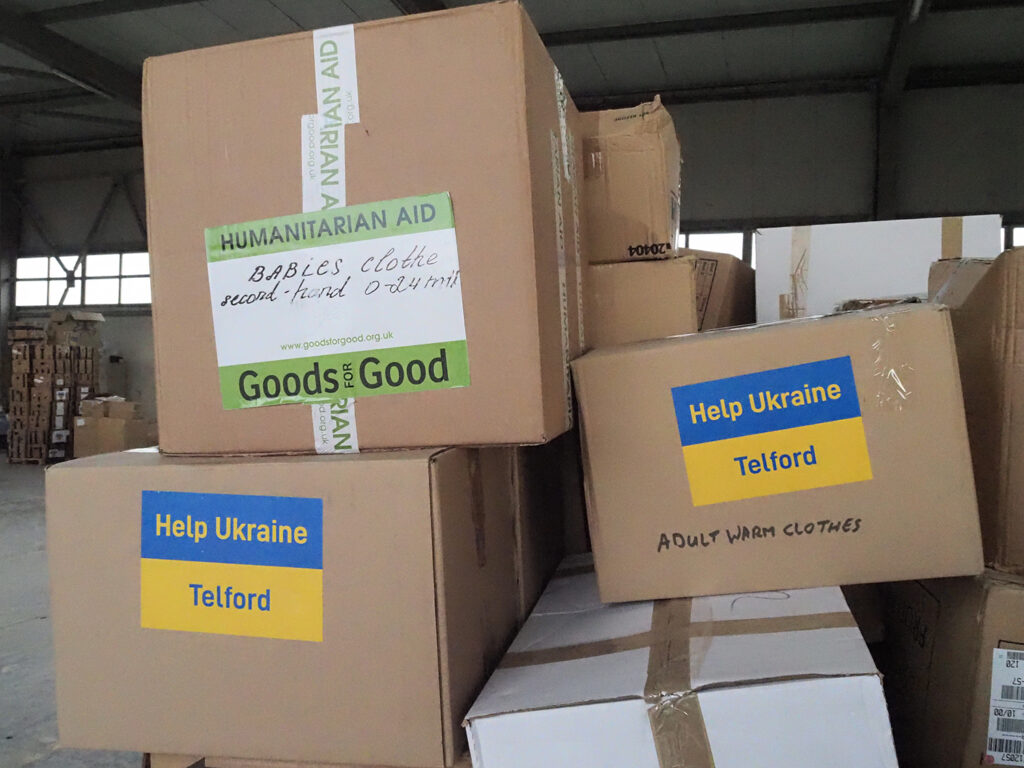
We went to volunteer for 12 days with a Polish charity delivering food, clothing, and medical supplies to Ukraine. Our job was to assemble food boxes, help load and unload the vans and trucks, plus accompany the drivers as they distributed these items into western Ukraine.
From there, they were moved further east, to the front lines or the cities under Russian attack.
Our driver explained the border at Budomierz was “modern,” without a buffer, or “no man’s land” between the countries. There was something vaguely Cold War about this crossing. Humorless guards perform silly tasks like shining flashlights under engine hoods and tire covers in already open trunks, and into backpacks. All documents needed to be presented twice.
Western Ukraine did not appear that much less prosperous than Poland — the houses a little smaller, a bit less polished, the cars older. It was not until we turned off the main highway into a small village that we understood we were not in a modern European country.
The road became mud. The many potholes were filled with water. The inhabitants had just finished attending church, and the mostly older women were short and stooped over.
There was, however, a new bright, shiny, gold-encrusted onion-domed church next to the old classic one. Rather than pave the road, a new church was the priority.
A horse-drawn cart drove down the street looking like a scene from “Fiddler on the Roof.” Our Polish hosts were totally blasé. They assured us that cart and horse was normal, even logical with a dirt road.
The Polish charity we were with, Folkowisko, was building a first-world medical clinic for the town and any internal Ukrainian refugees who needed care.
Further into Ukraine, toward Lviv, a graveyard appeared on our right. Numerous new blue and yellow Ukrainian flags flew in the cold wind, marking the fresh graves of the town’s soldiers.

These decomposing young bodies were only the latest reminder of why this area is known as “bloodlands.” Every inch of Ukraine has been fought over for thousands of years. The endless slaughter of both armed defenders and innocent civilians has no end.
On the way to this graveyard, our host pointed out World War I front lines, plus trenches and berms dug by forced labor in World War II.
Then a field was pointed to where the Nazis shot all the town’s Jews and threw them into pits. Since there are no ravines on this flat land, we suppose any field sufficed for mass graves.
Lviv was lively. The streets full of cars and pedestrians and no signs of destruction. The inner historic core looked and felt like a classical European city with beautifully proportioned buildings featuring ornate facades, wrought iron balconies, and Greco/Roman decorative finishes.
Lviv has been an urban center for thousands of years, and because it had no military value, both the Germans and the Allies left it alone. It seems to be surviving intact in yet another war. Modernizing occurred along the way, but the DNA of multicultural life remains.
There were plenty of draft-age men here. The Ukrainian army is over a million strong and, at the moment, they are only looking for a selective few. (Contrast this with the Russians who are conscripting HIV+ prisoners.) There were also uniformed soldiers on leave. Interestingly, curfew and an alcohol cutoff was in effect. We were told this was to make it easier for the police to discourage sabotage after dark.
Restaurants were full; stores seem well stocked and people were trying on sunglasses and discussing the merits of this or that handbag.
It seemed a bit surreal considering the air raid app on our phone. Everyone was aware of the beastly trench warfare taking place on the eastern front. Everyone knew someone in the army who had been killed or wounded. Our tour guide told us of several friends who are no longer alive.
Most of the people we met expressed surprise that we were there. The only Americans we saw were journalists. We explained that we are realists and understand that Lviv is not Bakhmut, that not all Ukraine is a war zone. We told of a head-on car crash a few weeks ago on a country road near our hometown killing four people.
Life has risks, intelligently judging them is something we have done well … so far.
To donate, please go to the Kosciusko Foundation’s — click here donate page — and add the dedication “Help Ukraine.”