Gone Fishing: Patience is part of the game
This April has brought the slowest start to the spring fishing season in years, as winter just can’t seem to let go.
By late April, the waters around Shelter Island are usually seeing their first decently large waves of the striped bass migration. This year is a different story. The bay’s surface water temperature is about 4 degrees colder than last year, and these chillier temperatures have caused quite a delay in the arrival of migratory species.
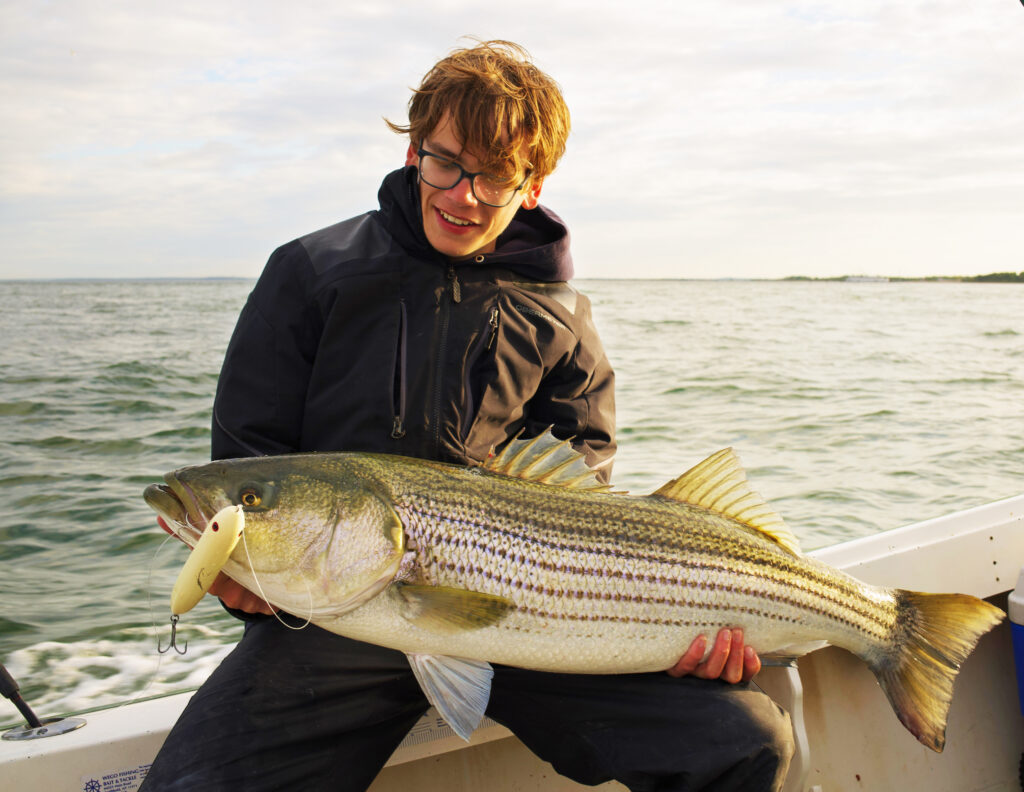
This is not to say the bay is empty. A handful of anglers around the Island have reported “scout” striped bass — the fish at the head of the migration. They are the early arrivals, the ones that push ahead of the main body. Size-wise, they are often smaller schoolies mixed with the occasional keeper. Their job is to test the conditions of an area before the bulk of the bio-mass follows.
In a normal year these scouts don’t stay around very long. A few warm nights, a steady south wind, and suddenly the floodgates open. But this spring, that trigger has just not come yet.
The water temperature at Orient Harbor read 52.4 degrees on April 26, but this number does not tell the whole story. In the fall, 52 degrees often signifies excellent fishing in the bay. But in the spring, that same reading can still read, for fish: “Cold.”
The difference lies beneath the surface. After a brutal winter like this one, the entire water column is cold, especially at the bottom. Even when a stint of warm days pushes surface temperatures to the low 50’s, the temperature around the bottom (where most fish are found at this time of year) is much cooler.
It is a subtle but important distinction. In my eyes, this unusual chilliness is the main reason for the sluggish start we are seeing. In years like this one, it’s important to remind ourselves that while the surface temperature may look right, the fish know better.
Until the warmth penetrates deeper into the water column, spring fishing will continue to lag behind.
But all hope for a great spring run is not lost, as all eyes now turn to the upcoming full moon — the “Flower Moon” — which anglers hope will jumpstart everything at once. After a long winter of cold and stagnant conditions, these stronger moon tides create the kind of push that gets migrations moving. It is not just a gradual trickle of life returning; it is often a noticeable surge. Squid in particular seem to respond almost overnight.
Those first pushes into our local waters often line up right around a full moon. There’s no better way to kick off the season than fresh calamari, and the Greenport Public Dock is one of the more consistent and popular spots to make it happen. When the squid show, word travels fast, and for good reason. On the right night, that dock can be loaded, with squid hovering just beneath the lights.
Squid fishing is straightforward. Light is the key as squid are drawn to it. A bright light pointed at the water beneath will help concentrate the invertebrates right below you. Once your lighting situation is figured out, tie a squid jig about 20 inches above a small lead. Drop it to the bottom and slowly work it back up.
Over the course of the night take note of where in the water column you’re catching most squid and target that area. Squid do not bite like fish; they grab your jig with their tentacles and hold on. For this reason, it’s optimal to not involve any “hookset” but rather a light lift of the rod.
When squid are in, they are usually in numbers, and it can turn into steady picking or full-on chaos in a hurry. It is a simple fishery, but when it lines up, it’s hard to beat.
For now, patience is still part of the game. Bass and bait are starting to trickle in as the puzzle comes together. It has been an unusually slow start, but the flood gates will open soon. With every tide cycle comes more hope.
With the full moon approaching, it feels like we are right on the edge of that first real push. And when it comes, it won’t ease in quietly.