Living on ‘osprey time’ at Mashomack
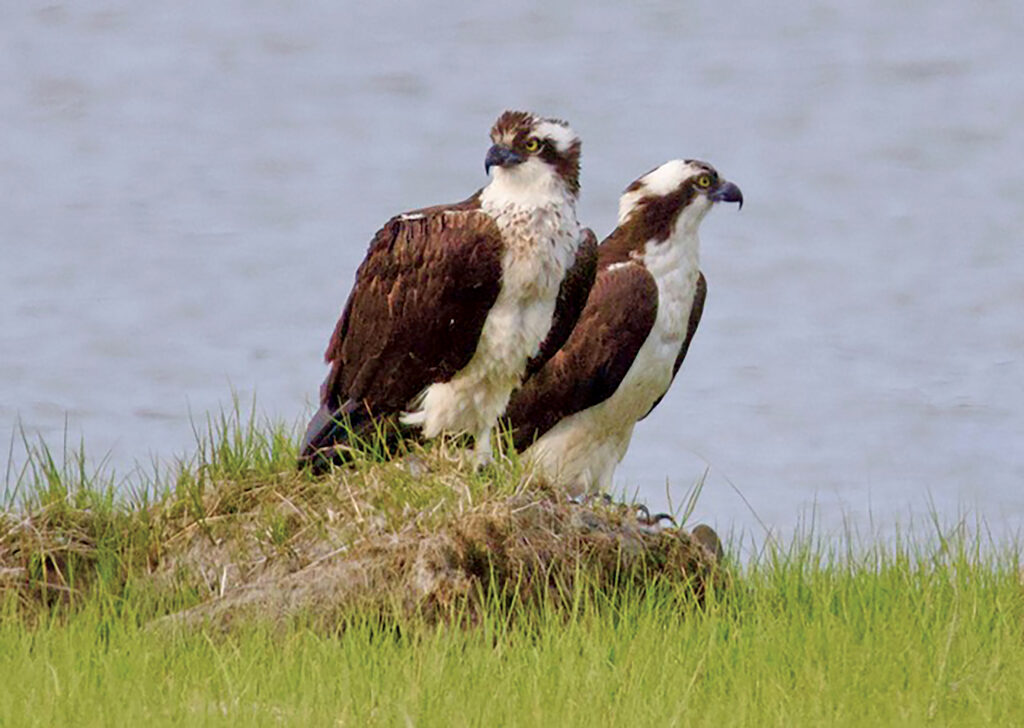
The Manor House at Mashomack Preserve, a property of The Nature Conservancy, was filled to capacity June 5 as author David Gessner spoke about his acclaimed book “Return of the Osprey.” The book chronicles a lifelong fascination with one of Shelter Island’s most beloved birds, and the conservation efforts that helped restore their numbers.

Presented as “A Remarkable Return,” the event drew nature enthusiasts, bird lovers, and longtime residents for an afternoon of storytelling, environmental history, and a reflection on the connection between people and the natural world.
Warm, engaging, and candid, Mr. Gessner spoke not only about ospreys, but also about his path as a writer. As a young man searching for direction, he received a small book advance to spend a year observing ospreys on Cape Cod. What began as an assignment became a turning point. The birds, he said, changed his life and helped establish him as a respected nature writer.
One of the afternoon’s most memorable themes was learning to live on what Gessner called “osprey time.” At first, sitting quietly and watching a nest for hours felt impossible. Over time, he learned to slow down, pay attention, and appreciate nature’s rhythms. The lesson, he suggested, extended far beyond birds.
The audience heard vivid descriptions of the osprey’s spectacular fishing dives, stories from his travels following the birds through the Caribbean and South America, and an account of how the species recovered after the widespread use of DDT caused catastrophic declines in osprey populations during the mid-20th century.
Mr. Gessner highlighted the efforts of Long Island conservationists and scientists whose work helped bring attention to the dangers of the pesticide and ultimately contributed to one of the most successful wildlife recoveries in American history.
The author noted that his birthday falls on March 15, near the time ospreys return each spring to his home in North Carolina. Over the years, the birds’ arrival has become a personal marker of the changing seasons, much as it has for many residents of Shelter Island.
Questions continued long after the presentation ended, a testament to both the speaker and his subject. Attendees eagerly shared their own observations and memories of the birds that have become an important part of life on the East End.
As attendees lingered on the Manor House porch overlooking Bass Creek, enjoying refreshments and conversations about migration, nesting habits, and the birds’ annual return, the osprey seemed to symbolize something larger for many attendees: a reassuring sign that some rhythms endure. Once pushed to the brink by DDT, the osprey’s recovery stands as proof, the guests agreed, that when people recognize a problem and act together, nature can respond in remarkable ways.