After decades on the waterfront, East End boatbuilders talk shop
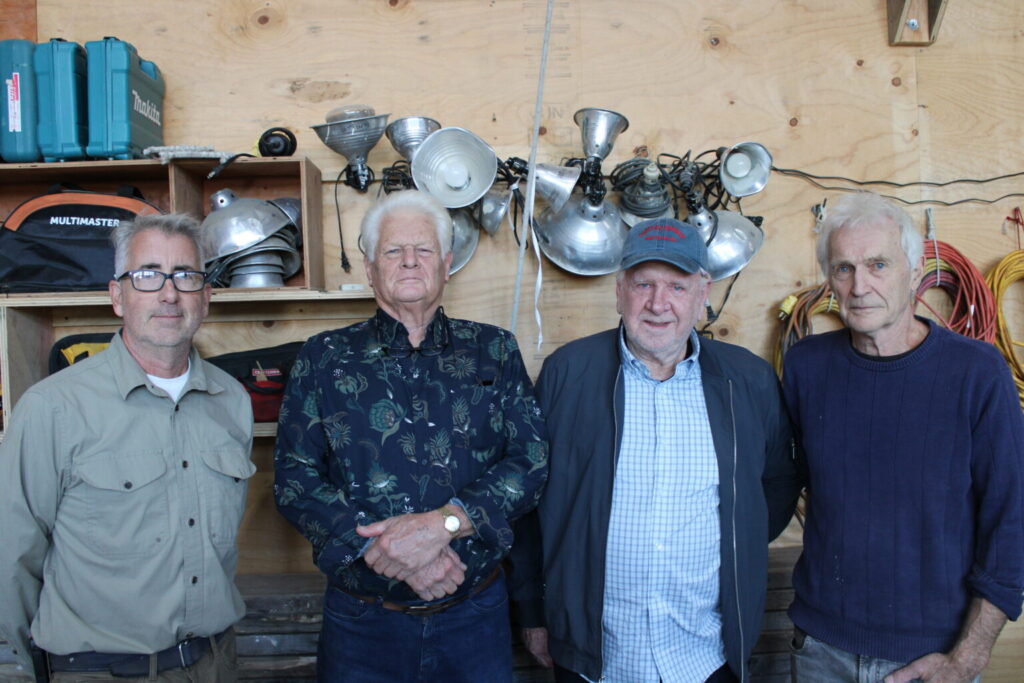
Four longtime East End boatbuilders — Patrick Brennan, Anders Langendal, Paul Gartside and John Needham — shared their unique paths as they discussed memorable projects, the local maritime economy and its history during a “Meet the Boat Builders” event Wednesday night.
“I’m so fortunate to be able to continue with this tradition,” said Mr. Brennan, the proprietor of Wooden Boatworks, which operates in Greenport and Southold, where the discussion took place. “We have some great customers, very passionate clients who are interested in boating and wooden boats, in particular. Without them and their commitment to their boats, we couldn’t do what we do.”
Mr. Brennan, who also acts as Greenport Village’s deputy mayor, trained as an architect and builder before turning to boat restoration.
A major part of continuing the trade is finding new, young workers to join. He said that while he has been able to attract a workforce, it’s hard to keep them in the area, pointing to housing availability and affordability as a main factor. “For me, it’s about continuing what’s been going on here for a long time, and making sure that we don’t lose the skills and the resources that we have here,” Mr. Brennan said.
The comment got a round of applause from the roughly 100 people who attended the event, hosted by the Times Review Media Group.

Mr. Gartside grew up in his parents’ boatyard in Cornwall, England, and today designs and builds boats from a small shop in East Hampton. He echoed Mr. Brennan’s concern about finding skilled workers, saying people nowadays are often specialized in one or two specific things, not in overall general training.
“It’s a very different world. It’s really important because if we don’t keep a continual string of skilled people coming into the industry, it’s very hard to run a business,” he said.
Mr. Langendal, who has run a boat shop in Greenport for decades, noted that available space for small businesses to continue the maritime trade is getting harder to maintain. He learned the craft as a teenager in Sweden before coming to the East End, where he eventually passed the knowledge on to his sons, who were both in attendance.
“Waterfront property is very expensive, and a lot of big corporations are trying to take over all the marinas and businesses out there,” he said. “It’s unfortunate.”
Mr. Brennan stressed the need to prevent “all the spaces to do our work (from getting) eaten up.”
He said it starts with being good neighbors, and them being cognizant that the work the boatbuilders do will cause noise and dust.
“We have to come up with ways that we can work together, be courteous,” he said. “All those things have to fall into place to make sure that we can continue to do what we do, and I think it’s a very good contribution to the community.”
Another factor in the decline of the maritime industry, according to Mr. Gartside, is that the hands-on work doesn’t carry the status that some other professions have.
The actual boatbuilding itself has changed, too.
Materials are harder to get, things are more expensive and the boats being worked on are old, making maintenance even trickier. “People nowadays treat their boats like their cars. They spend a lot of money on it, and they expect it to not need a whole lot of maintenance,” Mr. Needham, who operates the family-owned Coecles Harbor Marina on Shelter Island, said with a smile. “They hold our feet to the fire on making sure that when they pick up the boat in the spring, everything is up to snuff.”
Mr. Gartside said it’s become increasingly difficult for boatbuilders to find usable materials. He said if he elects to use material from a tropical hardwood farmer, it then also turns into finding what’s ethically sourced.
“We feel like sometimes we’re making boats out of rhinoceros horn,” he said.
Coupled with that are both age and the unsurprisingly harsh maritime conditions: saltwater, wind, sun exposure, marine fouling.
But the most challenging fixes are also the most rewarding, the panelists said.
Mr. Needham shared a story about a customer needing a new engine for their boat. The seemingly quick fix was soon complicated by an overhaul that included six iron fuel tanks, a new fuel system, hoses, filters and plumbing.
The finished work brought joy not just to the customer but to the whole company.
“The team is so important, and the leadership of that team is so important. To see that coming together into your product, it’s beautiful,” he said.
During the question-and-answer portion of the discussion, Mr. Langendal was asked — by one of his sons — if any specific build or rebuilds stand out in all his years.
The white-haired, Sweden native thought for a few seconds before offering a simple reply. “There are so many good projects,” he said.