Rumrunners and pirates have their day: History meets local lore at Museum
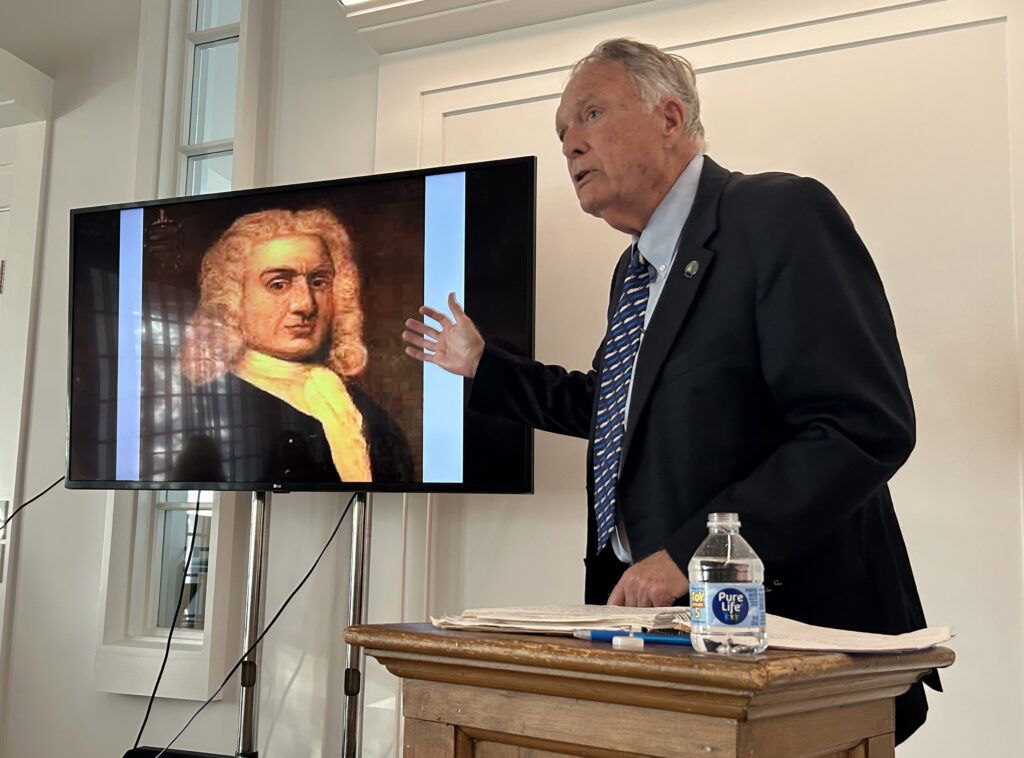
Noel Gish kept a rapt audience of Islanders focused on “Pirates, Raiders and Rumrunners” throughout his presentation at the Shelter Island History Museum on Saturday, Nov. 7.
Beginning with the long-fascinating figure of Captain Kidd, he cleared away the myths and mists of history to explain that the man executed for piracy and murder had really been a privateer commissioned by the King of England. Kidd later landed on the wrong side of a political reversal of power, and was hanged not once, but twice, after the first rope broke, protesting his innocence to the end.
Assisted by Kathryn M. Curran, executive director of the Robert David Lion Gardiner Foundation, Mr. Gish outlined how Long Island, surrounded by water and offering countless inlets for landings by ships of all kinds, was the perfect place for both legitimate commerce and nefarious operations.
There was considerable information on Kidd’s fabled buried treasures, most of which has been accounted for, including his transactions with the Gardiner family on their island generations ago.
A former history teacher, Mr. Gish punctuated his factual accounts with humorous anecdotes and historical photos, carrying the presentation forward through the centuries, detailing the role of Island patriots during the Revolution, and the abuses of marauding raiders who invaded from the shores of Connecticut.
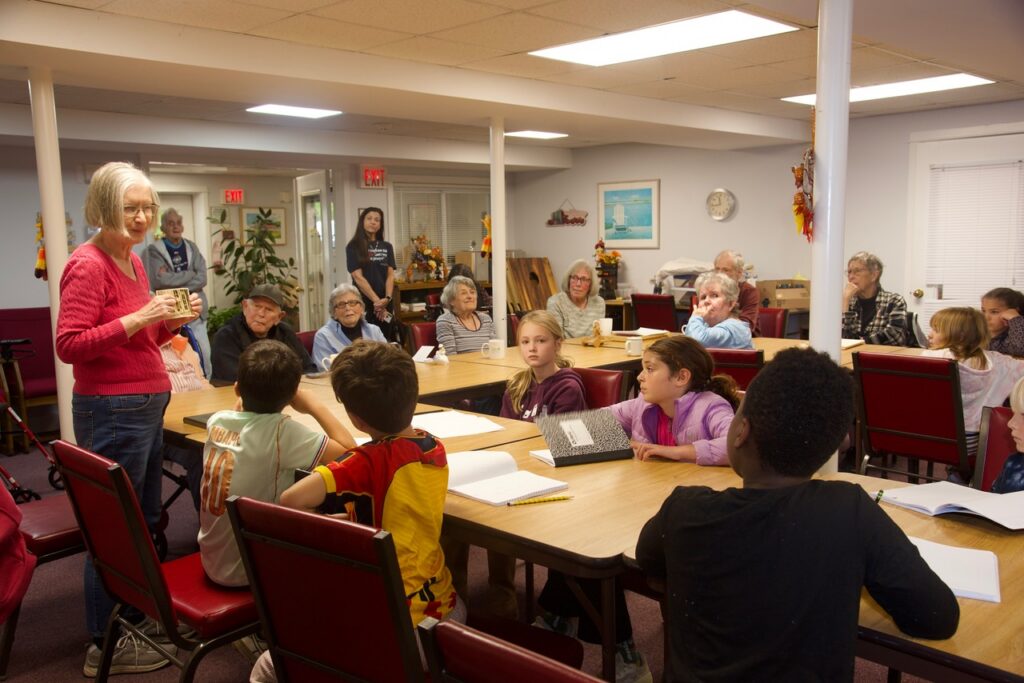
It was when he launched into the discussion on rumrunning and bootlegging during Prohibition, that it became an audience participation event. Islanders whose families have lived here for generations related stories they’d heard from their parents about the illegal transport of banned beverages, operations that kept the Island economy alive during the Depression.
Penny Kerr’s father was part of the Clark family who lived in Mashomack and said he’d seen crates of French champagne in the barn on the grounds, where celebrities were entertained at booze-filled parties when the estate was owned by wealthy investment banker Otto Kahn. Penny’s husband, John Kerr, said there was a small building on the grounds that housed a shortwave radio station, and organized crime figures could control rumrunning operations from as far away as the Caribbean.
“Most of Shelter Island was involved in it,” said Ms. Kerr. John Kerr said that local drivers would report to the station and be given an address and $100 to make deliveries of the product, a substantial source of income.
Cliff Clark, CEO of South Ferry, shared stories he’d been told by his father, of local boats evading pursuit by the Coast Guard. “The big Coast Guard boats were fitted with heavy machine guns,” Mr. Clark said. “They’d chase the swift, shallow rumrunners’ boats. Shell Beach wasn’t one long peninsula back then, but a group of little islands. The local boats could scoot in between them, but when the Coast Guard boats tried to follow them, they’d run aground.”
Peter Dinkel, a member of the SIHM Board, recommended a book about the local bootlegging trade called “Rum Row: The Liquor Fleet That Fueled the Roaring Twenties,” by an East End author, Robert Carse, a prolific writer on maritime adventures.
Board President Chris Carey and board member Jim Gereghty, who had portrayed bootleggers in a SIHM summer musical, invited guests to enjoy a libation after the talk. No bathtub gin or bootleg rum was served, but Mr. Gereghty dispensed local wine and cider. Looking at the guests lingering in one of the original Havens House rooms to discuss the presentation, SIHM Executive Director Nanette Lawrenson remarked, “This is what it must have been like when the Havens family lived here, Islanders gathering to share stories and enjoy each other’s company.”