Restoration keeps hope alive for Bay Scallop harvest
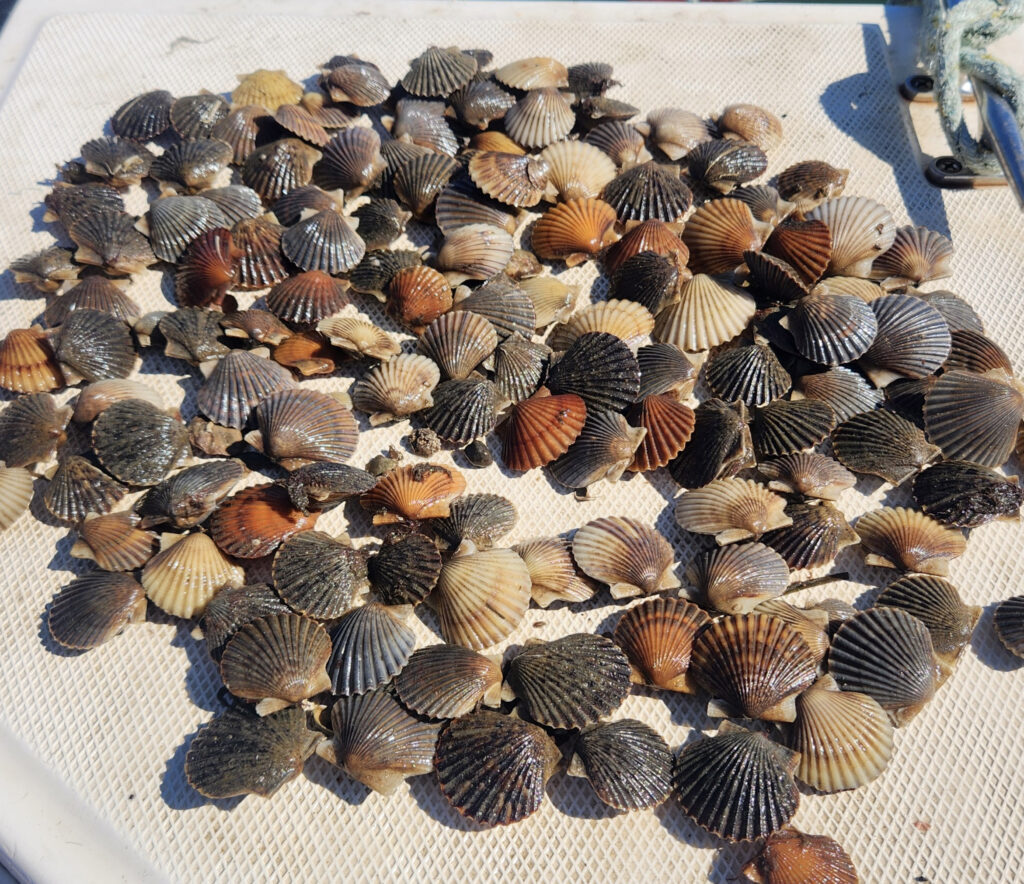
It’s been nine years of disappointing harvests for Peconic Bay scallop lovers and the baymen who feed them, and nine years since Opening Day — the first Monday in November — was a day to celebrate.
The sudden die-off of nearly all the adult, harvestable scallops in the late summer of 2019 left baymen without an important source of winter income, and it’s been slim pickings ever since.
Bay scallops live two years, spawning at the end of their first year, and dying of old age in their second. The timing of the scallop harvest allows adults plenty of time to spawn before they’re harvested or die of natural causes. Increasingly, summertime mass die-offs of adults have cut their lives short.
Peconic Bay scallops may be scarce, but they are not extinct, and large numbers of juvenile scallops have been observed since 2019, only to die before they are big enough to harvest.
Aquaculture specialist Harrison Tobi works on bay scallop restoration with the Cornell Cooperative Extension of Suffolk County. Mr. Tobi says that last fall, his surveys found a marked drop in wild adult scallops of spawning age, and he was concerned.
“I had low expectations for juvenile populations this fall,” he said. “However, in the few surveys conducted so far since Oct. 1st, we’ve seen great juvenile densities … high densities that we haven’t seen in the last three seasons.”
Mr. Tobi says there are signs that the Orient Harbor spawner sanctuary, bags of small scallops grown as seed scallops in protected waters of Orient Harbor, helped boost the number of wild scallops this year. Like every other object stuck in the ice last winter, the spawners were damaged, and repaired before the spring spawning season.
With opening day 2026 less than two weeks away, Mr. Tobi said it’s still too early to make any predictions. “We just started our fall population surveys in the Peconics and Gardiners Bay,” he said. “Harvestable adult populations are very, very low, which one would expect given the very low adult populations we saw this spring. I’m very excited to continue our surveys, though. The high juvenile numbers may be a sign of hope for next year. And maybe, as we continue our fall surveys, we might find more adults as well.”