Check your trees: laurel wilt confirmed on Long Island
Cornell University is hosting an information session on Sept. 10 about laurel wilt, a fungal disease spread by the invasive redbay ambrosia beetle. The public is encouraged to attend and learn the symptoms and mitigation for this new issue.
The first confirmed case for New York State was identified in Northport when a homeowner noted a dying sassafras on their property and sent samples to Cornell for diagnosis. The disease was then further confirmed by the U.S. Department of Agriculture’s Animal and Plant Health Inspection Service.
Originating in Asia and first identified in the U.S. in Georgia in 2002, the disease is deadly to plants and present in multiple southeastern states, with the northernmost cases prior to New York’s detection in Kentucky and Virginia.
“The detection of laurel wilt on Long Island marks a troubling new chapter in the spread of this invasive plant disease,” State Department of Environmental Conservation Commissioner Amanda Lefton said. “DEC is collaborating with our conservation partners to understand the extent of impacted trees, evaluate control options, and launch public outreach to increase awareness about laurel wilt and how to report it.”
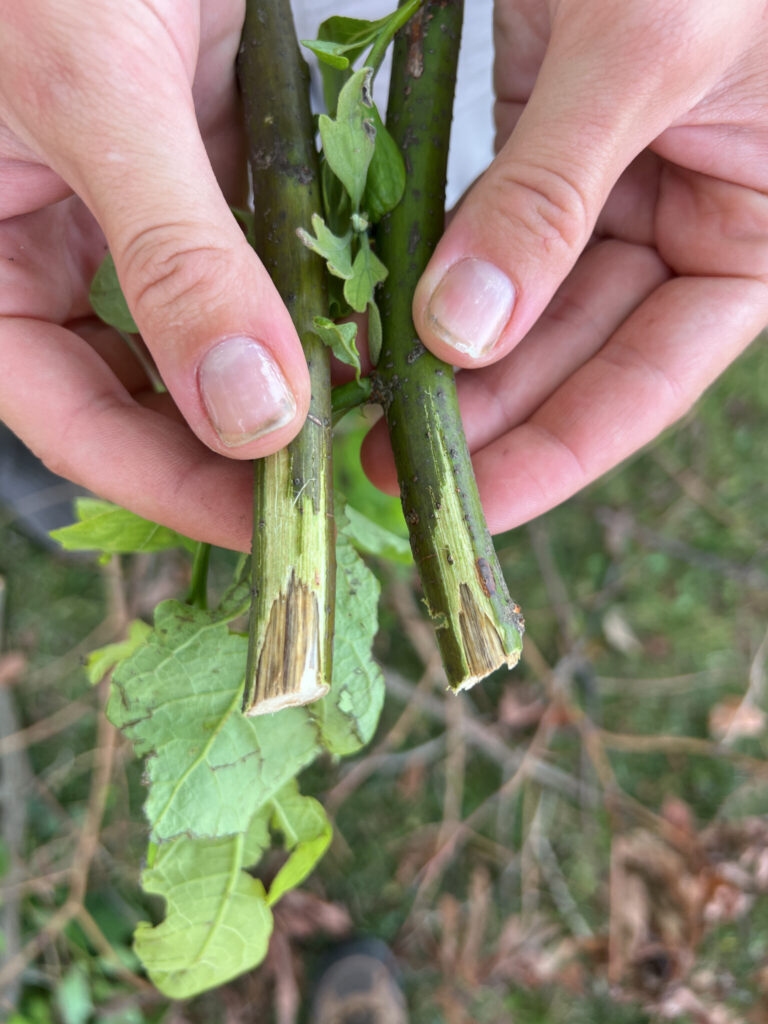
Laurel wilt causes rapid decline in sassafras and spicebush. Signs and symptoms to look for include:
• Sudden wilting of leaves.
• Dark streaking of sapwood beneath the bark.
• Small entry holes on the branches, trunk, or roots, which are sometimes surrounded by fine sawdust-like “toothpicks” pushed out from the bark.
Members of the public who encounter symptomatic sassafras and spicebush are advised to submit a report through nyimapinvasives.org. The DEC advises not moving or transporting branches, trunks, or bark from symptomatic sassafras or spicebush, even for disposal.