Shelter Island History Museum, Sylvester Manor announce collaboration
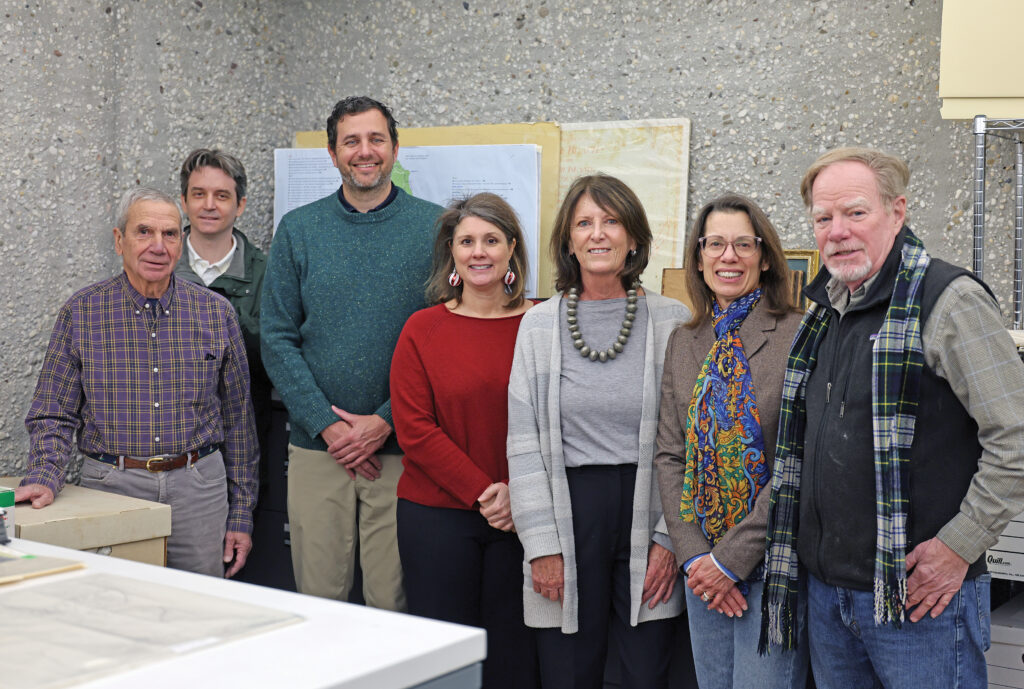
Two Island cultural institutions that have long labored to preserve Shelter Island’s history in their unique ways have announced on Jan. 9 that they will collaborate on a project to safeguard important historical artifacts.
While Sylvester Manor undertakes a three-year construction and renovation of its 1737 Manor House, the Shelter Island History Museum will store the Manor’s most prized historical artifacts in the Museum’s climate-controlled, fire-proof vault under a lease agreement approved by directors and trustees of the two organizations.
This unprecedented collaboration suggests that new opportunities to work together will emerge in the future.
“As partners, we are making sure that the important documents of our Island’s history are preserved and made available to researchers, scholars and the public,” said History Museum Executive Director Nanette Lawrenson. “Documents from both organizations will serve as the basis for further collaboration on exhibits and programs. We look forward to working together to share stories about Shelter Island and the experiences of its people.”
Under the agreement, the Museum will safeguard the objects and archival materials, keep them on the Island, and ensure they remain accessible to Sylvester Manor staff for further research while the Manor House undergoes its long-planned rehabilitation. Future exhibits and programs that highlight the role of Sylvester Manor in Shelter Island’s history will draw inspiration from the Manor’s collections in temporary storage, as well as the Museum’s own archives.
“We are thrilled to be working with the Shelter Island History Museum to protect these precious resources during the Manor House construction,” said Sylvester Manor Executive Director Stephen Searl. “This partnership covers all three aspects of our mission — preserve, cultivate, and share historic Sylvester Manor.”
Home for millennia to indigenous Manhansett People, Sylvester Manor (sylvestermanor.org) is the most intact remnant of a former slaveholding plantation north of Virginia. The 236-acre site passed through 11 generations of Sylvester descendants, from 1652 until 2014, when heirs gifted it to the nonprofit Sylvester Manor organization.
Now an historic district of national significance on the New York and National Registers of Historic Places, over the past 370 years, Sylvester Manor has been a provisioning plantation, an Enlightenment-era farm, and a pioneering food industrialist’s summer estate. Today it includes the 1737 Manor House, a restored 19th-century windmill, an Afro-Indigenous Burial Ground, and a working farm, with educational and cultural arts programs open to all.
The 283-year-old Havens House is the anchor of the Shelter Island History Museum (shelterislandhistorical.org). The farmhouse, built by William Havens in 1743 on 1,000 acres, was integral to Island living, serving as a store, tavern, school, post office and town meeting hall. It remained in the Havens family for 170 years.
The Shelter Island Historical Society, founded in 1922, took possession of the house and grounds in 1971 and established the History Museum there in 2024. Havens House was placed on both the National and State Registers of Historic Places in 1986.
Today, the Museum preserves thousands of historic documents and countless artifacts related to Shelter Island and shares that history though exhibits, tours, events and cultural and educational programs. During the winter months, the Museum is open Wednesday through Friday, from 10 a.m. to 2 p.m.