



Women’s History Month: Shelter Island’s Elizabeth Havens
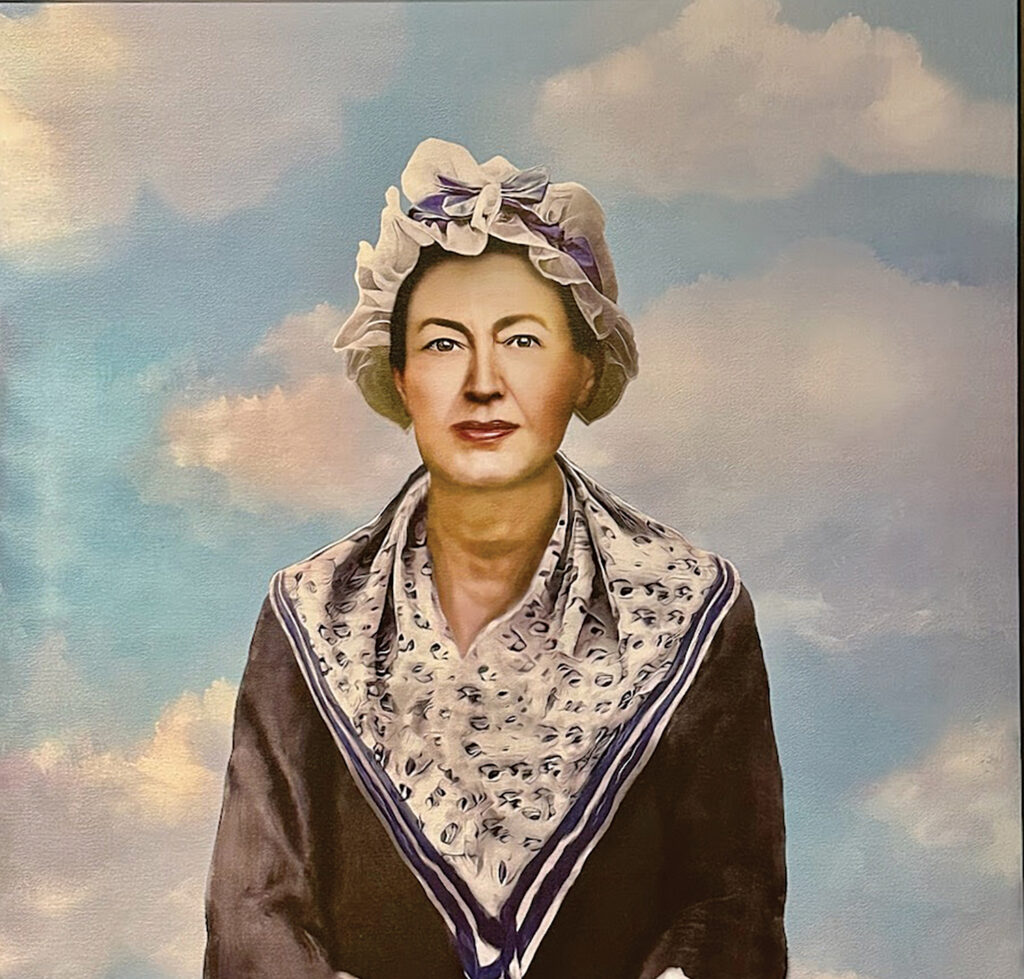
Built in 1743, Havens House, now home to the Shelter Island History Museum (SIHM), was also once home to our Women’s History Month celebrant, Elizabeth Havens (1742-1828).
In her 85 years, she experienced colonial life on Shelter Island, marriage, motherhood, and widowhood, as did many women of that era. But when her husband, Captain James Havens, went to fight for America’s freedom in the Revolutionary War, Elizabeth became a storekeeper, and later, a landowner in her own right. This is her story.
In the Digital Tapestry exhibit here at the SIHM (this is an innovative, interactive, Augmented Reality experience which tells the Havens’ story through characters based on the real James and Elizabeth Havens), Elizabeth explains that she grew up just down the road on the Bowditch farm.
Her father, Joel Bowditch, was a signer of the Shelter Island Declaration of Independence, and her mother was Bethiah Case. James Havens had a Case relative in his ancestral line, too, making him and his eventual bride distant cousins. Elizabeth and James married in 1760, moving into the house they called “Heartsease” the following year. Here, Elizabeth birthed 11 children; six of them predeceased her, which was not uncommon in colonial life.
Heartsease was the main building on the Havens’ farm, and it also housed Shelter Island’s general store. Archive material tells us it sold dry goods, such as wheat flour, supplies like iron nails and bolts of cloth, and luxury items from rum to silver buckles.
Shelter Islanders could pay for their purchases by bartering goods or their labor, or, of course, in coins. In addition to being a home and store, Heartsease was also a schoolhouse for all the Island children. In colonial times, community was an extension of family, and here on Shelter Island, the community was strong.
Then came the Revolution. James left to become a militia leader and later, a privateer in the Colonial navy, leaving Elizabeth to look after the farm, the store, the school, and the family. At one point, she also had to deal with the enemy.
A company of British Royal Marines disembarked from one of their warships. Knowing James was a militia member, the Redcoats ransacked Heartsease, stole a watch, a warm coat, and a gun used for hunting. They also robbed other neighbors, threatened to burn down a widow’s house, and beat several colonists.
After the War, which left eastern Long Island “devastated,” according to author Patricia Shillingburg in her 2003 essay, “The Settlers of the East End,” “the folks took up life where they had left it and in many cases started over.” James passed in 1810 at the age of 68. Elizabeth once again ran the store, this time as the Widow Elizabeth Havens, keeping the same kind of neat bookkeeping ledgers her husband had.
Later documents, like a tax assessment list from 1815, and copy of the First Pew List from the Presbyterian Meeting House on Shelter Island, give a glimpse into Elizabeth’s later life.
She died in 1828, and is buried in the Presbyterian Church cemetery. Her gravestone reads, “In memory of Elizabeth Bowditch, Widow of James Havens. Born November 12, 1742. Died March 15, 1828 age 85 ys. 4 mo. 3 ds. While I lie buried deep in dust, my flesh may be in God’s care. These withered limbs with him I trust. To raise them strong and fair.”
For more information on Elizabeth and James Havens, Havens House and the Havens family, please see our website at shelterislandhistorical.org.
The Shelter Island History Museum at 16 South Ferry Road is open Wednesday through Friday, from 10 a.m. to 2 p.m.


