Suffolk Closeup: Traffic jam

There was quite the political explosion last week about the first-in-the-nation congestion pricing program that took effect in Manhattan last month, including comments from Suffolk County, although many miles away.
The administration of President Donald Trump last week rescinded what had been federal approval of the program. U.S. Transportation Secretary Sean Duffy thundered about the plan’s fee for drivers entering Manhattan south of 60th Street, which includes $9 for operators of cars on weekdays from 5 a.m. to 9 p.m. and $2.25 overnight, and higher for trucks. Duffy called that a “slap in the face to working class Americans and small business owners.”
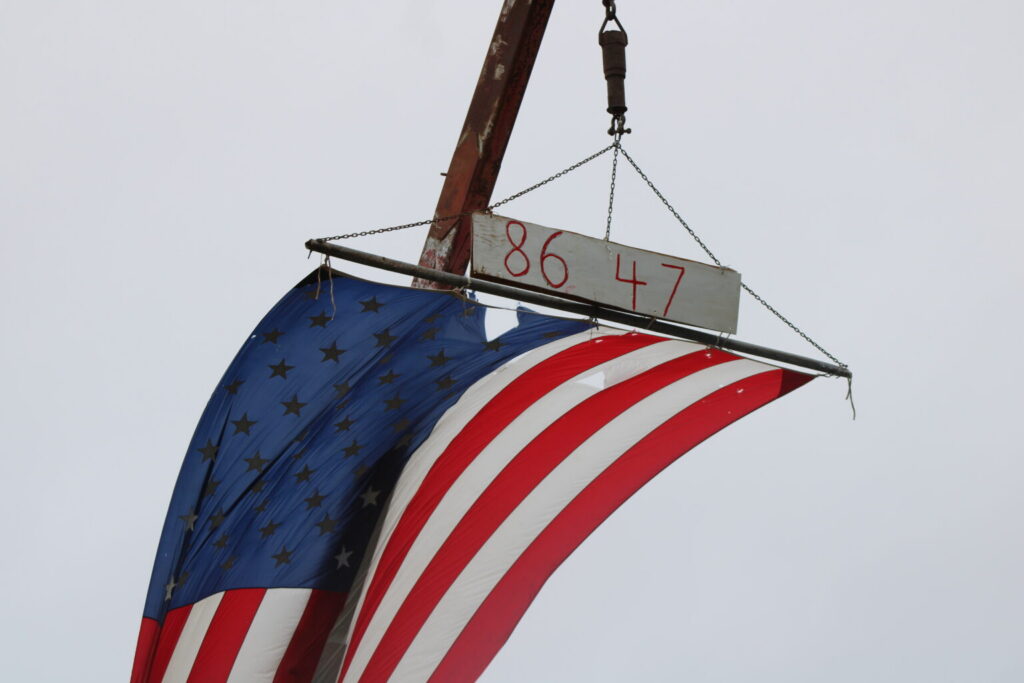
Trump himself made a posting on his Truth Social platform: “CONGESTION PRICING IS DEAD. Manhattan, and all of New York, is SAVED.” And, he added, also with capital letters: “LONG LIVE THE KING!” Later, an image of Trump wearing a crown in front of the New York City skyline was posted by the White House.
The response from New York Gov. Kathy Hochul (D) was quick, strong and with a particular focus on Trump’s “king” comment. At a press conference at Grand Central Station, she declared: “President Trump tweeted ‘long live the king.’ I’m here to say New York hasn’t had a king in over 250 years. We sure as hell are not going to start.” In “the streets of the city where battles were fought, we stood up to a king, and we won then. In case you don’t know New Yorkers, when we’re in a fight we do not back down — not now, not ever.” “We are not subservient to a king or anyone else out of Washington,” Hochul continued, framing the situation as a Federal-State collision as New York seeks to deal with traffic congestion in midtown Manhattan. She called the Trump administration action a federal “attack on New York sovereignty.” She said the State was “in a fight mode within seconds of us getting this [Duffy] notification. Our MTA was prepared; we knew this would come,” stated the governor.
The money raised through the congestion pricing toll is to go to fund billions of dollars for mass transportation in the region. Janno Lieber, chief executive officer and chairman of Metropolitan Transportation Authority, standing with Hochul, announced a lawsuit brought by the MTA in U.S. District Court to challenge the federal action. He called the congestion pricing plan “a thoughtful local solution” and said it was “mystifying” that the Trump administration seeks to reverse course, citing “four years of environment study and a 4,000-page environmental review.” “New York ain’t going back,” Lieber said. “We tried gridlock for 60 years. It didn’t work. It cost our economy billions, but you know what’s helping our economy? What’s making New York a better place is congestion pricing.”
He said traffic in midtown Manhattan was down 9% in January and that 1.2 million fewer vehicles than usual entered the area covered by the plan.
While the lawsuit, which Hochul predicted would be successful, proceeds, “the cameras are staying on,” she said. An array of cameras has been installed in the congestion pricing area to photograph license plates of passing vehicles to facilitate sending bills to their operatorsAlthough the New York plan is the first in the U.S., the city-state of Singapore was the first to introduce congestion pricing in 1975 and since then cities including London, Stockholm and Milan have instituted such plans. From Suffolk County, Congressman Nick LaLota (R-Amityville), who represents eastern and much of central Suffolk including Shelter Island, issued a statement
and a 4,000-page environmental review.” “New York ain’t going back,” Lieber said. “We tried gridlock for 60 years. It didn’t work. It cost our economy billions, but you know what’s helping our economy? What’s making New York a better place is congestion pricing.”
He said traffic in midtown Manhattan was down 9% in January and that 1.2 million fewer vehicles than usual entered the area covered by the plan.
While the lawsuit,which Hochul predicted would be successful, proceeds, “the cameras are staying on,” she said. An array of cameras has been installed in the congestion pricing area to photograph license plates of passing vehicles to facilitate sending bills to their operators.
Although the New York plan is the first in the U.S., the city-state of Singapore was the first to introduce congestion pricing in 1975 and since then cities including London, Stockholm and Milan have instituted such plans.
From Suffolk County, Congressman Nick LaLota (R-Amityville), who represents eastern and much of central Suffolk including Shelter Island, issued a statement saying “President Trump’s decisive action to eliminate Gov. Hochul and the New York State Democrats’ commuter tax fulfills his commitment to enhancing affordability for my constituents, marking a significant victory for suburban commuters … The commuter tax imposed by New York State Democrats was a blatant scheme to fund Gov. Hochul’s inflated MTA budget at the expense of Long Island’s working families and small businesses. It unfairly targeted our residents who depend on their vehicles for livelihood. It’s the government’s duty to foster policies that bolster — rather than burden — our community’s economic well-being.”
LaLota noted how in November, he joined with other members of the House of Representatives — including Congressman Andrew Garbarino (R-Sayville), who represents much of western Suffolk County — in a “resolution expressing opposition” to the congestion pricing plan.
From East Hampton, attorney Jack Lester, with an office in Springs, who brought a lawsuit on behalf of New Yorkers Against Congestion Pricing opposing the plan, said the group is “grateful for Transportation Secretary Duffy’s decision to terminate congestion pricing.” It includes members of the New York City Council, a State Assembly member, and what the lawsuit describes as “grassroots community-based organizations.” The group, he said, is “particularly appreciative of the secretary’s recognition of the deleterious socioeconomic impacts that the program was inflicting on small businesses and vulnerable working class New Yorkers” and “will intervene in any litigation to revive congestion pricing.”
Meanwhile, there have been social media reports on the plan achieving success. The headline of a piece on the Fast Company website: “A million cars have disappeared: What NYC is like after one month of congestion pricing.” It started: “Congestion pricing began on January 5. One month in, traffic is down, public buses are faster, ridership is up.”
“Congestion Pricing Update: Fewer Than 500K Vehicles A Day Are Entering the Central Business District” was the headline of a piece on nyc.streetsblog.org The New York League of Conservation Voters has been a leading supporter of the plan and an article by Peter Aronson, a writer for the group, said: “It’s been just over a month since the congestion pricing program in New York City and we are already seeing story after story about how commute times are going down, traffic in the lower half of Manhattan is speeding up, and first responders are responding faster.”
The courts will now decide the fate of congestion pricing in New York City.