A perfectly named full moon for February
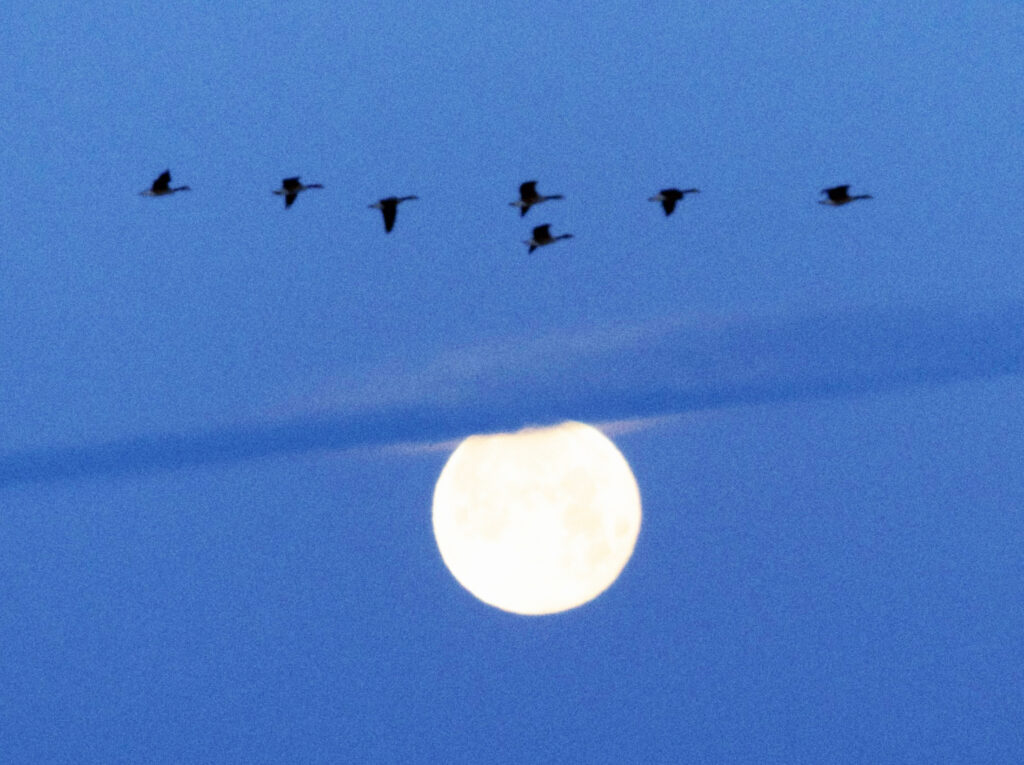
February’s full moon, known as the Snow Moon, reached its full size and radiance on Monday, Feb.1 at 5:09 p.m.
The Old Farmer’s Almanac notes that it’s obvious how February’s full moon got its name; traditionally the most snow falls during this month, according to data from the National Weather Service.
The Old Farmer goes a bit further, however, telling the story from the 1760s, when, “Captain Jonathan Carver, who had visited with the Naudowessie (Dakota), wrote that the name used for this period was the Snow Moon …”
There are other, evocative names for February’s lunar event from Native American tribes. The Cree traditionally called this the Bald Eagle Moon or Eagle Moon, the Almanac states, adding, “The Ojibwe Bear Moon and Tlingit Black Bear Moon refer to the time when bear cubs are born. The Dakota also call this the Raccoon Moon; certain Algonquin peoples named it the Groundhog Moon, and the Haida named it the Goose Moon.”
And there are other names, including the Bony Moon and Hungry Moon from the Cherokee, which designates a time when food was scarce and winter seemed relentless.
It’s good to be reminded on bright, beautiful and cold nights that there are neighbors who are less fortunate and looking at winter in the same way as the Cherokee sages who named February’s full moon.