Camp for grieving kids returns to Shelter Island
The little boy had a question for his mother: “Why am I the only person who doesn’t have a dad?”
And the mother, struck suddenly again by grief, had to remind her son that his dad had died.
The story was related by Paul Rubin, director and founder of Camp Good Mourning, the nonprofit, Long Island-based 501c3 organization, which has been in residency for weekends the past three years at Camp Quinipet, and is returning in May. Created eight years ago, Camp good Mourning is funded through donations, sponsors and grants.
The program provides, Mr. Rubin said, “free bereavement camp programs for Long Island children 7 to 17.” Also welcomed are children mourning a member of an extended family who lived with them.
The overnight weekend camp will have, according to Mr. Rubin, caring adults to help the kids understand that they don’t have to pretend that everything is all right, but, he said, where “being who you are is accepted, and it’s O.K. not to be O.K.”
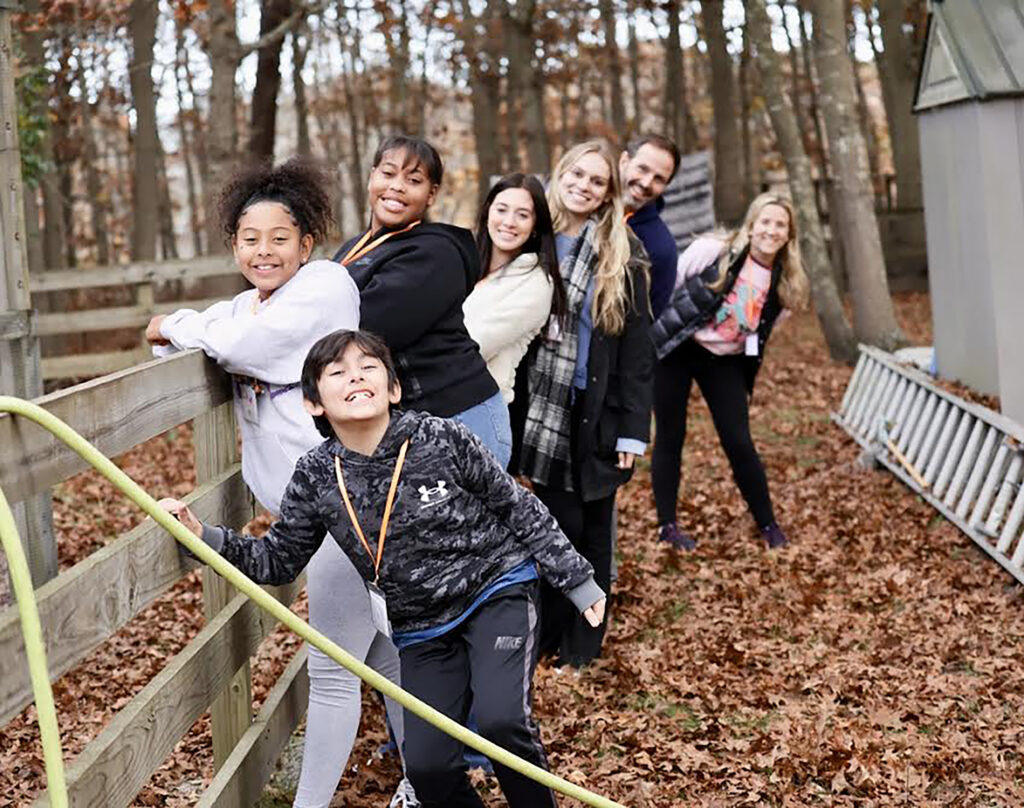
In addition to the standard kid’s camp fare of fun, sports, adventures and team-building exercises, there will be mental health professionals and grief specialists leading age-appropriate, small group sessions. Campers will have an opportunity to share their grief stories from beginning to end, if they want to.
And being Camp Quinipet, there will be opportunities for fishing, volleyball and time to be together for a weekend on a high hill above a beautiful bay, away from the world. This year the organization is looking for closer bonds with Shelter Island, not just seeking volunteers, but also more involvement from the business community, nonprofits and Town government, Mr. Rubin said.
He knows the Island and Camp Quinipet well, beginning his association in 2022 when he was a camp counselor at Camp Adventure, which ran weekends for children with cancer.
“Shelter Island and Quinipet is a perfect place for us,” Mr. Rubin said, and not just for the idyllic setting. “It’s metaphorical for our purposes.” He explained that part of the Camp Good Mourning experience is to remove kids from their daily lives and be taken to another place, emotionally, but also physically.
“You really have to see the faces of these kids when they’re looking out the windows of the coach-bus and getting on the ferry,” he said. “They’re like, “We’re on this bus. And the bus is getting on a boat? And we’re going across the water?’ It really makes the point that something new is happening and we’re getting away from it all.”
HEALING INNER TRAUMA
It’s said that one of the most devastating emotional experiences in life is a parent confronting the death of a young child. What might be equal to that inner trauma is a child dealing with the death of a parent or sibling.

According to New York Life Foundation, one in12 children will experience the loss of a parent or sibling by the age of 18. The Foundation has reported that “93% percent of educators agree that childhood grief is a serious problem that deserves more attention from schools, and 87% agree with the statement that ‘over the past five years, it has become more common for students at my school to seek out emotional support from their teachers.’”
The Foundation’s report noted that when teachers were asked how many students each school year typically need their support due to the loss of a loved one, a large majority of educators said at least one student.
The COVID pandemic was especially cruel to children. More statistics from American sociologists in a December 2021 report titled “Hidden Pain” revealed that “among the more than 760,000 deaths from COVID-19 in the United States in the last 22 months are many parents, custodial grandparents, or other caregivers on whom more than 160,000 children had relied for financial, emotional, and developmental support. Many of these children — aged under 18 — already faced significant social and economic adversity, and these devastating losses can impact their development and success for the rest of their lives.”
The Camp Good Mourning experience, according to Mr. Rubin, gives children the opportunity to share their “grief story and express their feelings in an emotionally safe, non-judgmental and compassionate community.”
GROWING THE SUPPORT
This year the camp will take place from Friday, May 1, to Sunday, May 3, and training for volunteers will be April 11-12, The training session for April 11 will be in Commack and the 12th will be on the Island.
Mr. Rubin reiterated that the organization wants stronger bonds with the Island as a whole. “We’re welcoming Islanders to volunteer, but also for more people and businesses to get involved as supporters,” he said.
One of those supporters is Amy Weinstein, who owns Eccentric Bagel with her husband, Darryn Weinstein. As our Charity Robey has reported, when a call went out for food to provide volunteers during a training session held in advance of a weekend last November, Eccentric Bagel responded by donating a luncheon that was deeply appreciated.
When Ms. Weinstein was 14, she lost her mother, so the mission of Camp Good Mourning has special resonance for her. “You know, death is not easy for any family to deal with. Often the young ones are really lost in the shuffle,” she said. “Everyone is going through their own chaos. It was just something I had to deal with.”
She wishes a grief-counseling program had been available to her at the time.
Other strong supporters are the Shelter Island Fire Department which visits the Quinipet to the delight of the campers. Our Lady of the Isle is an eager contributor to the work of the camp, and the North Ferry provides support for the program as well.
“We’d like to see more private Island individuals and businesses helping us with our mission,” Mr. Rubin said.
For more information
Phone: 631-772-9115
Email: [email protected]
Website: campgoodmourning.org/about
Camp for grieving kids returns to the Island
Camp Good Mourning! seeks more Island support for its mission
BY AMBROSE CLANCY EDITOR
The little boy had a question for his mother: “Why am I the only person who doesn’t have a dad?”
And the mother, struck suddenly again by grief, had to remind her son that his dad had died.
The story was related by Paul Rubin, director and founder of Camp Good Mourning, the nonprofit, Long Island-based 501c3 organization, which has been in residency for weekends the past three years at Camp Quinipet, and is returning in May. Created eight years ago, Camp good Mourning is funded through donations, sponsors and grants.
The program provides, Mr. Rubin said, “free bereavement camp programs for Long Island children 7 to 17.” Also welcomed are children mourning a member of an extended family who lived with them.
The overnight weekend camp will have, according to Mr. Rubin, caring adults to help the kids understand that they don’t have to pretend that everything is all right, but, he said, where “being who you are is accepted, and it’s O.K. not to be O.K.”
In addition to the standard kid’s camp fare of fun, sports, adventures and team-building exercises, there will be mental health professionals and grief specialists leading age-appropriate, small group sessions. Campers will have an opportunity to share their grief stories from beginning to end, if they want to.
And being Camp Quinipet, there will be opportunities for fishing, volleyball and time to be together for a weekend on a high hill above a beautiful bay, away from the world. This year the organization is looking for closer bonds with Shelter Island, not just seeking volunteers, but also more involvement from the business community, nonprofits and Town government, Mr. Rubin said.
He knows the Island and Camp Quinipet well, beginning his association in 2022 when he was a camp counselor at Camp Adventure, which ran weekends for children with cancer.
“Shelter Island and Quinipet is a perfect place for us,” Mr. Rubin said, and not just for the idyllic setting. “It’s metaphorical for our purposes.” He explained that part of the Camp Good Mourning experience is to remove kids from their daily lives and be taken to another place, emotionally, but also physically.
“You really have to see the faces of these kids when they’re looking out the windows of the coach-bus and getting on the ferry,” he said. “They’re like, “We’re on this bus. And the bus is getting on a boat? And we’re going across the water?’ It really makes the point that something new is happening and we’re getting away from it all.”
HEALING INNER TRAUMA
It’s said that one of the most devastating emotional experiences in life is a parent confronting the death of a young child. What might be equal to that inner trauma is a child dealing with the death of a parent or sibling.
According to New York Life Foundation, one in12 children will experience the loss of a parent or sibling by the age of 18. The Foundation has reported that “93% percent of educators agree that childhood grief is a serious problem that deserves more attention from schools, and 87% agree with the statement that ‘over the past five years, it has become more common for students at my school to seek out emotional support from their teachers.’”
The Foundation’s report noted that when teachers were asked how many students each school year typically need their support due to the loss of a loved one, a large majority of educators said at least one student.
The COVID pandemic was especially cruel to children. More statistics from American sociologists in a December 2021 report titled “Hidden Pain” revealed that “among the more than 760,000 deaths from COVID-19 in the United States in the last 22 months are many parents, custodial grandparents, or other caregivers on whom more than 160,000 children had relied for financial, emotional, and developmental support. Many of these children — aged under 18 — already faced significant social and economic adversity, and these devastating losses can impact their development and success for the rest of their lives.”
The Camp Good Mourning experience, according to Mr. Rubin, gives children the opportunity to share their “grief story and express their feelings in an emotionally safe, non-judgmental and compassionate community.”
GROWING THE SUPPORT
This year the camp will take place from Friday, May 1, to Sunday, May 3, and training for volunteers will be April 11-12, The training session for April 11 will be in Commack and the 12th will be on the Island.
Mr. Rubin reiterated that the organization wants stronger bonds with the Island as a whole. “We’re welcoming Islanders to volunteer, but also for more people and businesses to get involved as supporters,” he said.
One of those supporters is Amy Weinstein, who owns Eccentric Bagel with her husband, Darryn Weinstein. As our Charity Robey has reported, when a call went out for food to provide volunteers during a training session held in advance of a weekend last November, Eccentric Bagel responded by donating a luncheon that was deeply appreciated.
When Ms. Weinstein was 14, she lost her mother, so the mission of Camp Good Mourning has special resonance for her. “You know, death is not easy for any family to deal with. Often the young ones are really lost in the shuffle,” she said. “Everyone is going through their own chaos. It was just something I had to deal with.”
She wishes a grief-counseling program had been available to her at the time.
Other strong supporters are the Shelter Island Fire Department which visits the Quinipet to the delight of the campers. Our Lady of the Isle is an eager contributor to the work of the camp, and the North Ferry provides support for the program as well.
“We’d like to see more private Island individuals and businesses helping us with our mission,” Mr. Rubin said.
For more information
Phone: 631-772-9115
Email: [email protected]
Website: campgoodmourning.org/about