The spy in the family tree: Island author and the Civil War
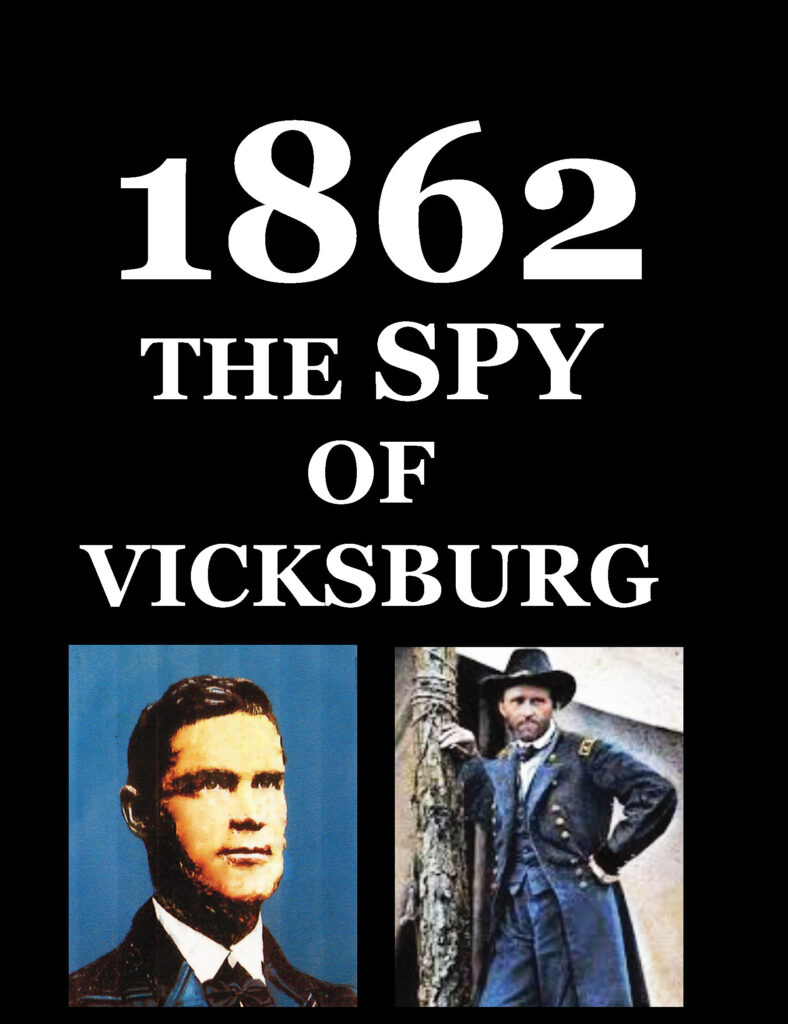
Allison Collard can be an inspiration to every family that amasses a trove of birth and death records, military documents, census forms, and religious certificates, whether in carefully preserved archival binders or randomly stored shoe boxes of photos and papers, in hopes of composing them into a rich and robust story.
Mr. Collard, who spends summers on the Island, said in 2015 he began sifting through old family photos and documents, spending over 2,000 hours on the project until May of 2021. He assembled the records into a book of nearly 600 pages. The project took him back through generations, across three centuries, filling out a family tree with Collards, Kretchmers and Clarks — farmers, prospectors, office holders and more — eight generations on his father’s side and five generations on his mother’s.

Mr. Collard has spent his career as a patent attorney and his diligent research, attention to detail and writing ability contributed to his compiling a book of extensive family history that he eventually had printed. He distributed 50 copies throughout the family, also sending three copies to his mother’s relatives in Germany, with whom he had shared stories and visits. The most fascinating ancestor to emerge was Edward Kretchmer, Al Collard’s great-grandfather, living as Kretchmer did on the cusp of this country’s transformation from an agricultural nation to an industrial giant, punctuated by a civil war that brought long-simmering tensions to a violent conflagration.
This is the story of a remarkable man whose life “spanned two continents, two centuries, two languages, two wives, survived Confederate prisons and major Civil War battles.” In the second half of the 19th century, he was a prominent manufacturer of bee hives, a producer of honey and bees, a successful farmer and winner of awards in state and national competitions for his products.
Yet, the most compelling part of his biography centered on the dangerous task for which he was chosen in the middle of the Civil War. It was in 1862 that Kretchmer took on the challenge of spying for the Union Army.
Key to fleshing out his story was an interview that Kretchmer had given to an Iowa newspaper, The Red Oak Sun, in 1890. He had waited decades after the end of the Civil War to tell his story of being a Union spy, he told the newspaper, because a lot of Confederate sympathizers remained in the area and they’d likely have shot him.
Kretchmer was recruited to be part of a reconnaissance program to help determine if Vicksburg, Miss., one of the Confederates’ most strategically valuable cities on the entire Mississippi River, was vulnerable. High on a hill above the river, the rebel forces were able to control all the traffic up and down the waterway, assaulting any Union ships that tried to pass through.
As General Ulysses S. Grant began to plan a siege of the city in 1862, he needed to know as much as possible about the Confederates’ fortifications as well as their supplies of military material.
During the war, from 1862-63, some 30,000 rebel troops were stationed in Vicksburg. General Grant had tried five times to attack the fortified city, but the Confederates had sharpshooters positioned in key locations all around it.
Both sides utilized networks of spies throughout the war, with intelligence gathered for the North by a force, actually named the U.S. Secret Service, overseen by famed Chicago detective Allan Pinkerton. Into their ranks was recruited 19-year-old corporal Edward Kretchmer. His mission: to walk around Vicksburg as an apparent civilian, all the while gathering military intelligence, then reporting the information back to headquarters.
His disguise, apparently successful, was appearing as an unremarkable German-Jewish peddler, one of many commonly seen selling thread, needles, buttons and cloth that were needed to repair worn-out Confederate uniforms. Eventually noticed as he appeared to be observing military installations, he was arrested and brought to a Confederate officer, Lieutenant-General John Pemberton, for questioning. The Kretchmer family had emigrated from Prussia, so Edward’s own German accent helped him maintain his facade, while he pretended to have no interest beyond the simple goods in his pack he offered for sale.
Here’s Kretchmer’s own recollection to The Red Oak Sun:
“… the first thing I did was to try to sell the general some of my wares. I was furiously catechised, but the only satisfaction they could get was that I wanted to sell needles and thread and pins. My apparent discomfiture in being unable to convey to them in my broken English the real value of my goods convinced them that I was not a spy. Whenever anyone opened his head to ask a question, I immediately interpreted it to be a request to look at my wares and I hustled the open pack over in front of him to display the things to him. After a while General Pemberton lost his patience with me and said, ‘Take this damned fool away; he hasn’t got sense enough to be a spy.’”
His interrogators, also concluding that he was “too damned dumb to be a spy,” Kretchmer was escorted out and eventually made his way back across both lines. His debriefing by General Ulysses S. Grant’s staff would be instrumental in Grant’s successful nearly seven-week assault on Vicksburg almost a year later.
Recounting the close call with his interrogators to The Red Oak Sun years later, Kretchmer said, “It was a foolhardy venture and I sometimes shudder when I think how the enterprise might have terminated.”
In fact, Kretchmer was captured twice by Confederates, once during the Battle of Shiloh, spending two months in the Confederate prison in Vicksburg and released to a Union Hospital after a prisoner exchange. He was eventually discharged from duty when military medical professionals deemed him “totally unfit for duty and unlikely to recover … from exposure while in the hands of the enemy, a prisoner.”
Released from the Union hospital in Jackson, Tenn., his military career ended at the age of 19 years and 9 months. He made his way home to Burlington, Iowa, riding his cavalry horse, Viola May, some 400 miles. His daughter recalled that he kept the horse, nicknamed Dolly, and “she was never used for work again. The children played with her and she was the family pet.”
Beyond his exploits as a spy, there is even more to the story of Edward Kretchmer, so much so that Al Collard compiled it into a book: “1862 — The Spy of Vicksburg.” For that book and the family history, he enlisted the assistance of a Shelter Island friend, John Colby, who is a publisher, and helped bring both books to fruition.
“1862 — The Spy of Vicksburg” has been published by Mr. Colby’s Brick Tower Press and is available for purchase from bookstores and online booksellers.