Town Enigineer: U.S. Geological Survey on salt water intrusion data needed
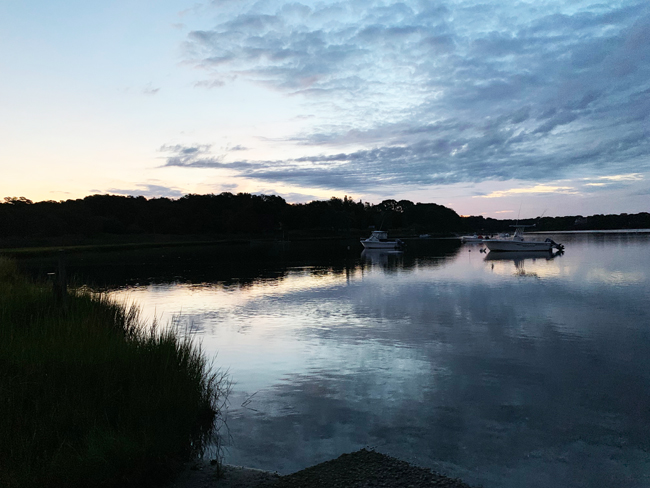
For years there has been anecdotal evidence of salt water intrusion in wells in parts of the Island, particularly in the Silver Beach area.
But now, with an effort undertaken by Town Engineer Joe Finora and members of the Water Advisory Committee, there could be some solid evidence to substantiate how prevalent it may be and where it exists and, perhaps, what can be done about it.
It won’t be a matter of months and may even take a few years of gathering data by the United States Geological Survey (USGS). But the process today is more sophisticated than it was several years ago when personnel had to come to the Island to take what Mr. Finora called “snap shots” of wells. That meant the data could only provide conditions at wells at the moment samples were taken and tested.
“The idea that we could collect real-time data from salt water monitoring wells didn’t exist,” Mr. Finora told the Water Advisory Committee at a March 16 meeting.
In addtion, well water samples collected and tested by Shelter Island Environmental Science students and members of the school’s Science Club, revealed that some tests had chloride levels above 200 parts per million (ppm). The U.S. Environmental Protection Agency uses 250 ppm as a secondary-standard for taste and possible plumbing issues, science teacher Dan Williams said.
With today’s technological advancements, the wells are equipped to steadily monitor salt water intrusion levels and feed the information back to be monitored with a large amount of data collected without having to visit each well site, but having the data automatically recorded.
What’s more, the USGS is conducting a Long Island study and, as it happens, two of the test wells are on Shelter Island. A shallow well will monitor salt water data at Wades Beach, while a deep well will record data from the Center. He hopes to get that local data from the USGS without cost. The expectation is the sets of data from the two wells will prove complementary to one another.
With the “snap shot” testing, data revealed information about the water from the top. But for those who live in near shore areas, readings from the bottom will be more useful in determining policies.
The new testing is expected to indicate if water is moving inward, landward or upward, he said.
Member Peter Grand said what may be revealed is the well in the Center may remain “rock solid,” while water at the Wades Beach test well and other near shore areas varies over time. That would substantiate a water reserve at the Center and vulnerabilities at near shore areas.
With two points, it won’t be possible to draw neighborhood conclusions, Mr. Finora said. But the data points through both the high pumping season when demand is increased and the late fall and winter season when pumping is low should provide an indication of what is happening with chlorides, the engineer said.
If chlorides are encroaching within landward boundaries of Shelter Island, or is it moving further offshore, which is posing less of a problem, he said. Depending on what movement is revealed, homeowners reporting issues with salt water intrusion may prove to be well specific rather than widespread, he said.
If the USGS agrees to allow the WAC to receive the data, it would still be awhile before useful conclusions could be drawn, Mr. Finora said.
It could be years or at least several seasonal changes to have enough meaningful data to begin to assess the extent of the issue and what may be needed to remedy any emerging situation, Mr. Finora said.